
Introduction: Prioritizing Borrowers in a Volatile Credit Environment
From 2022 through 2025, interest rate volatility and tighter underwriting standards have fundamentally changed how lending institutions approach their pipelines. In a tough market where mortgage demand fluctuates monthly and cost per funded loan continues to climb, lenders can no longer afford to work files in the order they arrive. The institutions achieving profitable growth are those that have learned to rank and route applications based on approval probability, time-to-close, and overall deal economics. Banks and mortgage businesses are redesigning the customer experience to improve profitability through borrower satisfaction, leveraging banking products and services to create value and enhance customer loyalty.
Prioritizing borrowers means moving beyond the traditional first-in-first-worked queue. It requires evaluating each application against current product criteria, credit qualification signals, and operational capacity to determine which files deserve immediate attention—and which should wait, be redirected, or receive automated nurturing. For mortgage teams processing hundreds or thousands of leads monthly, this distinction is the difference between hitting volume targets and watching qualified borrowers close with competitors. The majority of improvements in borrower experience come from fostering a borrower-centric culture, rather than relying solely on technical changes.
“Lenders report 10–20% higher pull-through rates when sales teams work high-readiness files first, rather than processing applications chronologically.”
This article is primarily written for lending institutions, mortgage businesses, and fintech product leaders who manage credit pipelines and sales operations. The focus is on how credit data—pulled from bureaus, enriched through monitoring, and operationalized through configurable rules—enables systematic borrower prioritization at scale. Altara Data provides credit intelligence, monitoring, and dispute automation infrastructure that helps institutions implement these capabilities within their existing workflows. The sections that follow break down the operational challenges, the data inputs, and the implementation steps required to build a credit-data-driven prioritization framework.

Why Lead Prioritization Is a Challenge in Lending
In 2024 and 2025, U.S. lenders face a common operational reality: fluctuating mortgage demand, constrained staffing budgets, and rising cost per funded loan. Many institutions have cut origination teams during down cycles, leaving smaller teams to handle unpredictable volume spikes when rates shift. The result is a growing gap between inbound lead volume and the capacity to properly qualify and convert those leads.
Several specific pain points make lead prioritization lenders particularly difficult:
- Large inbound volumes from digital channels create queues where applications look similar at first glance. A mortgage team receiving 2,000 online leads per month may only have capacity to meaningfully touch 30–40% of them.
- Fragmented data sources across LOS, CRM, credit bureaus, and marketing platforms prevent real-time visibility into borrower quality. Loan officers often begin working files without knowing whether the applicant meets current credit qualification signals.
- Manual triage by loan officers leads to inconsistent prioritization. Some officers gravitate toward “noisy” borrowers—those who call frequently or submit multiple documents—rather than objectively qualified borrowers who may be quieter but more fundable.
- Compliance and fair lending constraints limit the use of crude rule-of-thumb sorting. Lenders cannot simply rank borrowers by characteristics that may correlate with protected classes.
- Delays between application, credit pull, and follow-up create stale leads. In mortgage and auto lending, a borrower who applied three days ago may have already locked with a competitor if no one followed up within hours.
Many lenders still rely on linear queues or simple score thresholds—working every file with a credit score above 640, for example—that fail to capture nuanced approval probabilities. This one approach ignores the difference between a 650-score borrower with stable income and declining utilization versus a 650-score borrower with recent collections activity and thin history.
For fintech platforms running embedded lending, prioritization is also a system-design challenge. Product teams must determine how to surface high-readiness applicants to partner lenders automatically, ensuring that the leads they route are worth the lender’s time and underwriting resources.
Quick-to-implement solutions, such as automated lead scoring and AI-driven prioritization tools, can help lenders address these operational challenges and improve the efficiency of prioritizing borrowers.
What Makes a Borrower “Approval-Ready”
An “approval-ready” borrower is one whose credit profile, documentation status, and timing align with current underwriting rules and product criteria. This is not simply about having a high credit score. Readiness is multi-factor and product-specific—what qualifies a borrower for an FHA mortgage differs substantially from what qualifies them for a jumbo loan or a prime personal loan.
Approval readiness breaks down into three dimensions:
Credit Readiness
- Credit score ranges that fit product tiers (e.g., >740 for best-execution pricing, 680–739 for standard approval, 620–679 for expanded guidelines)
- Stable payment history with no recent severe derogatories
- Credit utilization within acceptable bounds, generally under 30% for revolving accounts
- Sufficient depth of credit history to support automated underwriting
- Clear understanding of what you owe to different lenders, ensuring all outstanding debts are accounted for when assessing overall debt obligations and readiness
Document and Data Readiness
- Income and employment verifiable through standard documentation or automated verification services
- Assets sourced and sufficient for down payment plus reserves
- Key KYC/AML checks passed without flags
- Complete application data submitted, minimizing back-and-forth with the borrower
Timing and Intent
- Active shopping behavior indicated by recent inquiries in the same product category
- Recency of application—borrowers who applied within the last 24–48 hours are more responsive than those from weeks prior
- Responsiveness to outreach attempts, indicating genuine purchase intent rather than casual rate-shopping
Lenders should avoid using credit score alone as a proxy for approval readiness. A borrower with a 720 score but incomplete income documentation and a recent charge-off is less ready than a 680-score borrower with clean history and full documents uploaded.
Typical thresholds and attributes used in 2024 underwriting include:
- FICO/Vantage score bands: >740 (prime/super-prime), 680–739 (prime), 620–679 (near-prime), < 620 (subprime or non-QM)
- DTI ranges: Under 43% back-end for conforming products, with some non-QM products accepting higher ratios
- Severe derogatories: Bankruptcy, foreclosure, or repossession within the last 24–48 months typically requires manual review or product-specific guidelines
Beyond static data, borrower readiness signals include:
- Recent hard inquiries in the same product category (e.g., multiple mortgage pulls within 14–45 days) suggest active shopping
- Recent large balance paydowns on revolving accounts indicate preparation for a major purchase
- Improving credit utilization trends over 30–90 days suggest financial stabilization rather than growing risk
Altara Data enables institutions to translate these readiness concepts into configurable rules and scores that can be applied programmatically across leads, removing the need for loan officers to manually assess each file against multiple criteria.
Key Credit Indicators Lenders Monitor
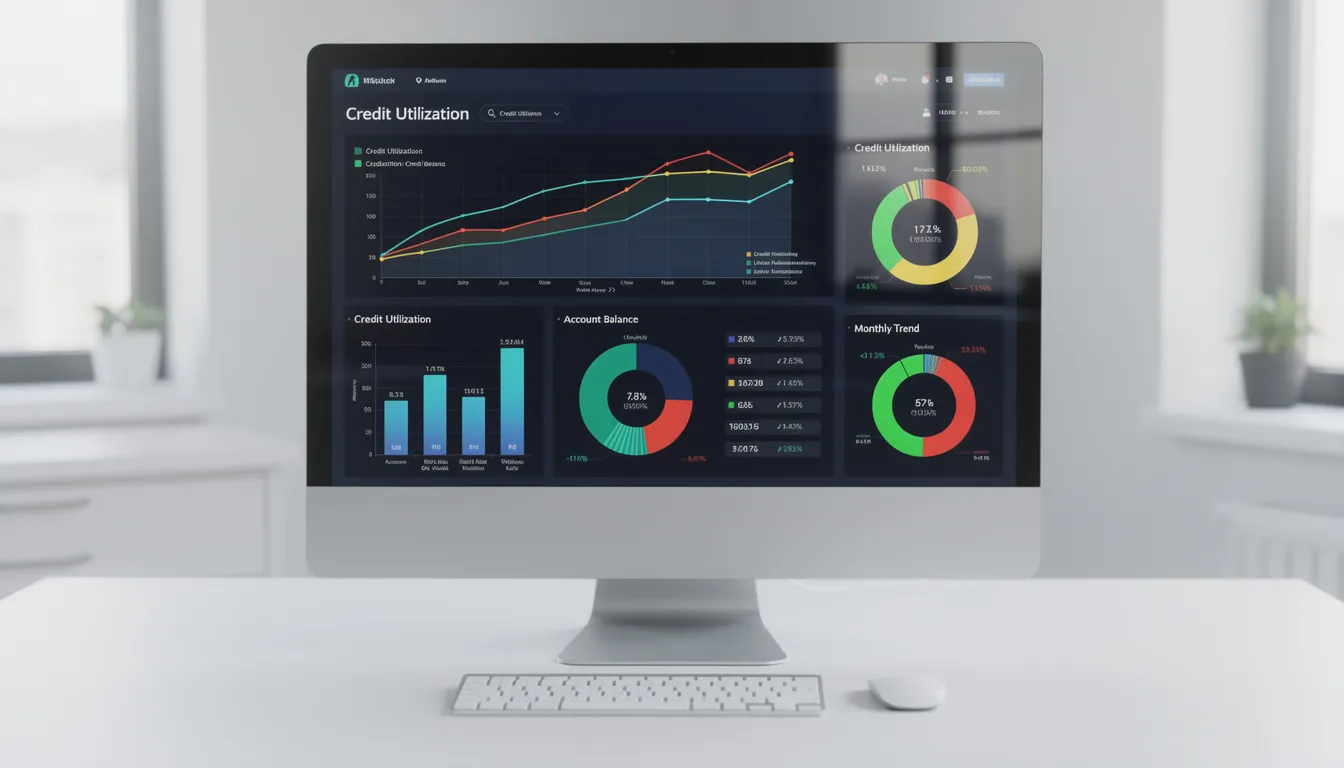
Modern prioritization starts with well-structured credit data—pulled from major bureaus and enriched with longitudinal monitoring—rather than relying on a single point-in-time score. The credit report provides the foundation, but the way lenders interpret and combine indicators determines whether prioritization is effective.
Primary Credit Indicators
- Credit score (FICO, Vantage): The baseline for risk tiering. Lenders map scores to product eligibility bands and pricing adjustments. A free credit report provides the starting point, but paid monitoring offers ongoing visibility.
- Revolving utilization: Overall utilization and utilization by trade line serve as proxies for financial strain or capacity. Borrowers with utilization under 30% across accounts signal better debt management.
- Delinquency history: 30/60/90+ days late marks and the recency of derogatory events affect both approval odds and pricing. A 90-day late from four years ago carries different weight than one from six months ago.
- Depth and age of credit history: Average age of accounts and age of the oldest trade line indicate credit experience. Thin files with fewer than three accounts require different evaluation approaches.
- Budgeting and spending habits: Effective budgeting and tracking monthly spending are reflected in credit utilization and payment history, directly impacting a borrower’s credit profile and their ability to manage debt repayment strategies.
Borrower Readiness Signals
- Recent inquiries by product type: A defined lookback window (typically 14–45 days for mortgage, 14 days for auto) helps identify active shoppers versus casual browsers.
- New tradelines opened: Recently opened high-balance or high-limit products may indicate financial stress or, conversely, successful qualification elsewhere.
- Utilization changes in the last 30–90 days: Sudden paydowns suggest a borrower preparing for a major purchase; sudden spikes may indicate emerging financial problems.
- Charge-offs or collections activity: New derogatory information appearing since the last review can disqualify a previously viable applicant.
- On-time rent payments: Reporting on-time rent payments to credit bureaus can help improve credit scores and serve as a positive readiness signal for lenders.
Combining Credit Qualification Signals
Lenders combine credit indicators with other data to develop a complete picture:
- DTI estimates using reported obligations plus stated or verified income from the lender’s system
- Payment shock analysis for mortgage and HELOC products—comparing proposed payments to current housing costs
- Alignment with investor overlays ensuring loans meet secondary-market acceptability standards
Continuous Monitoring vs. One-Time Pulls
The difference between static credit pulls and continuous monitoring is critical for effective prioritization:
- Event-based alerts notify teams when material changes occur—a collection resolved, utilization dropped more than 20 percentage points, or a new derogatory posted
- Re-prioritizing the pipeline becomes possible when a monitored lead’s profile improves or degrades, moving them up or down in the queue automatically
Each credit reporting agency updates records at different intervals, and borrowers’ situations change throughout the lending process. Altara Data supports both real-time bureau pulls and scheduled monitoring cycles, enabling lenders to keep prioritization models updated without manual rechecks or redundant pulls that increase costs.
Credit Report Analysis: Extracting Actionable Insights
A thorough credit report analysis is the foundation for managing multiple debts and achieving profitable growth, both for borrowers and the lenders who serve them. A credit report, available from major credit reporting agencies like Equifax, Experian, and TransUnion, offers a detailed snapshot of a consumer’s credit history—including open accounts, payment records, outstanding balances, and recent inquiries. By carefully reviewing this report, borrowers can identify which accounts carry the highest interest rates, spot late payments or negative marks, and pinpoint opportunities to improve their credit standing.
For borrowers juggling multiple debts, the credit report becomes a roadmap for creating a targeted repayment strategy. By identifying high-interest accounts, consumers can prioritize which debts to pay down first, maximizing savings over time. Two popular strategies are the snowball method—where you pay off the smallest balances first for quick wins—and the avalanche method, which targets accounts with the highest interest rates to save the most money in the long run. Both approaches require a clear understanding of your accounts and interest rates, all of which are detailed in your credit report.
Lenders and financial technology companies, such as Dispute Beast, empower borrowers by providing tools to analyze credit reports, track progress, and develop actionable plans. With access to a free credit report and ongoing credit monitoring, borrowers can manage their finances more effectively, resolve negative items, and create a strategy that supports both immediate and long-term financial goals. Ultimately, extracting actionable insights from your credit report is the first step toward taking control of your debt, improving your credit, and achieving profitable growth.
Interest Rate Considerations in Borrower Prioritization
Interest rates are a critical factor when prioritizing debt payments, especially in a tough market where every dollar counts. For borrowers aiming to achieve profitable growth and regain control of their finances, understanding the interest rates on each account is essential. The avalanche method is a powerful strategy that involves making minimum payments on all debts while directing extra funds toward the account with the next highest interest rate. By focusing on the highest interest rate debts first, borrowers can minimize the total interest paid and accelerate their journey to becoming debt-free.
Alternatively, some borrowers may choose the snowball method, which prioritizes paying off accounts with the smallest balances first. This approach delivers quick wins and builds momentum, which can be motivating for those who need to see immediate progress. Both methods have their merits, and the best choice depends on individual financial goals and psychological preferences.
Lenders and credit reporting agencies play a vital role in helping borrowers understand their interest rates and develop a personalized repayment plan. By providing clear information and guidance, these organizations enable borrowers to make informed decisions, prioritize payments effectively, and save money over time. In a competitive market, the ability to manage debt strategically—whether through the avalanche or snowball method—can make a significant difference in achieving financial stability and profitable growth.
How Prioritization Improves Pipeline Efficiency
Prioritizing borrowers using credit data produces measurable outcomes: higher contact rates with qualified leads, fewer touches per funded loan, and shorter cycle times from application to closing. For sales managers and operations leaders, these efficiency gains translate directly to lower costs and higher revenue per team member.
Practical Lead Prioritization Frameworks
Lending institutions typically implement tiered systems that route applications based on composite readiness scores:
- Tiered queues (A/B/C buckets): High-readiness borrowers land in Tier A for immediate attention; moderate-readiness in Tier B for same-day follow-up; lower-readiness in Tier C for nurturing or automated outreach
- Routing rules: Tier A mortgage leads route to senior loan officers or specialized teams with higher close rates; Tier C leads may route to inside sales or digital channels
- Service-level targets: Same-hour outreach for Tier A leads, same-day for Tier B, and 48-hour automated contact for Tier C
How Credit Data Drives Queue Management
Credit qualification signals combine with behavioral data to create dynamic prioritization:
- Credit score, DTI, and derogatory status provide the baseline assessment
- Application completeness, channel source (direct vs. affiliate), and engagement signals (document uploads, portal logins) layer on top
- Rules engines or predictive models continuously reshuffle queues as new credit events arrive from monitoring
Concrete Efficiency Gains
Organizations that implement credit-data-driven prioritization report:
- Higher pull-through rates when teams focus first on borrowers with high approval odds and realistic closing timelines
- Reduced time spent packaging files that will ultimately be declined due to obvious credit disqualifiers visible earlier in the process
- Improved partner satisfaction for fintech platforms that send lenders more fundable applications, strengthening relationships and commission structures
Integration with Existing Workflows
Altara Data can be embedded in CRM and LOS workflows to operationalize prioritization:
- Real-time borrower scoring and tagging within existing systems via API, so loan officers see priority indicators without switching screens
- Automated alerts when monitored prospects cross configured risk or readiness thresholds, ensuring hot leads don’t go cold
- Dashboards for sales managers to view pipeline stratified by readiness tier and credit risk band, enabling better resource allocation
The goal is to create a process where the right borrowers receive attention at the right time, automatically, based on data rather than guesswork or squeaky-wheel dynamics.
Operational Outcomes of Better Prioritization
The business case for prioritizing borrowers extends beyond “working more leads.” Proper prioritization affects P&L performance, portfolio risk, and compliance posture across the organization.
Revenue and Productivity Outcomes
- Higher funded-loan volume per loan officer without increasing headcount—teams focus effort where it generates results
- Lower cost per booked account thanks to fewer unproductive touches, faster decisioning, and less rework
- Increased cross-sell and upsell when credit data reveals borrowers who qualify for multiple debts or products (e.g., HELOC plus first mortgage), identified early in the pipeline

Risk and Portfolio Quality Improvements
- Consistent application of credit policies across the pipeline because ranking is rules-based and data-driven, not dependent on individual loan officer judgment
- Appropriate product steering that directs lower-quality applicants toward suitable products or partners before devoting full underwriting resources
- Cleaner portfolios with fewer borderline files that create strain for collections and servicing teams in the long run
Compliance and Governance Benefits
- Documented, auditable rules for prioritizing borrowers using objective credit signals that can withstand fair lending examination
- Reduced reliance on subjective judgment that can introduce disparate impact concerns
- Centralized configuration of qualification and prioritization logic controlled by credit policy and risk teams, not scattered across individual loan officer practices
Strategic Planning Benefits
- Better forecasting of fundable volume because lead quality is visible early, enabling more accurate pipeline projections
- Faster adaptation to investor guideline changes by updating prioritization rules centrally rather than retraining every front-line staff member manually
Altara Data’s role is to provide standardized, configurable credit data pipelines and monitoring that support these outcomes across mortgage, consumer, and fintech lending programs. The platform delivers reports and scores that integrate with existing systems, enabling institutions to build and maintain prioritization capabilities without developing custom infrastructure.
Borrower prioritization is ultimately about doing more with existing teams and data while staying within regulatory expectations—a balance that credit-data-driven systems help maintain.
Implementing a Credit-Data-Driven Prioritization Framework
Lenders can move from ad-hoc prioritization to a formal, data-driven framework through a structured implementation process. This is not a one-time project but the development of an ongoing operational capability that improves over time.
Step-by-Step Implementation Approach
Step 1: Define “approval-ready” criteria per product
Work with credit risk, capital markets, and sales leadership to establish what qualifies as approval-ready for each product. Document score thresholds, DTI limits, derogatory lookback periods, and minimum account requirements. Ensure criteria align with investor guidelines and secondary market requirements.
Step 2: Map required credit indicators to data sources
Identify the specific data elements needed—scores, utilization, delinquency status, inquiry counts, monitoring events—and determine which systems currently provide them. Note gaps where data is unavailable or unreliable.
Step 3: Implement a centralized credit data layer
Either build internal infrastructure or partner with a platform like Altara Data to normalize and deliver bureau and monitoring data into CRM/LOS systems. Standardization is critical—loan officers and automated systems need consistent data formats to apply prioritization logic.
Step 4: Configure prioritization rules or models
Develop readiness scores or traffic-light tier assignments (A/B/C, Green/Yellow/Red) that can be executed automatically. Begin with rules-based logic that credit policy teams can control; consider machine learning models later as data accumulates.
Step 5: Integrate prioritization outputs into frontline workflows
Ensure that queues, routing assignments, alerts, and reporting dashboards reflect prioritization status. Loan officers should see priority indicators within their normal workflow, not in a separate system they must check manually.
Step 6: Monitor performance and refine rules
Track pull-through rates, time-to-approval, and default rates by priority tier. Review results quarterly and adjust rules to improve accuracy. Save money by identifying which signals actually predict fundability versus which create false positives.
Change Management Considerations
- Train sales and operations teams to trust and use prioritization signals rather than reverting to old habits
- Ensure transparency so management can explain why certain borrowers are ranked above others
- Create feedback loops so loan officers can flag cases where prioritization seems incorrect, enabling model refinement
Altara Data is built to support enterprise deployment of these capabilities: white-label credit monitoring, dispute automation to resolve inaccuracies, and credit-event alerting that lenders can embed under their own brand and within their own workflows. The platform handles the data infrastructure so lending teams can focus on what they do best—closing loans with qualified customers.
Prioritizing borrowers using credit data is not a one-time project but an ongoing operational capability. Institutions that develop and refine this capability create sustainable competitive advantages: lower acquisition costs, higher close rates, cleaner portfolios, and the ability to manage pipeline effectively in any market condition. The combination of accurate credit data, configurable rules, and continuous monitoring creates a foundation for profitable growth that scales with the business.
Conclusion and Future Outlook
Successfully managing multiple debts and achieving profitable growth requires a comprehensive, strategic approach—one that starts with a detailed credit report analysis and incorporates smart interest rate considerations. By leveraging the insights found in their credit reports, borrowers can identify areas for improvement, prioritize payments using proven methods like the snowball or avalanche approach, and create a plan that maximizes savings and minimizes risk.
As the credit and lending market continues to evolve, staying informed about changes in interest rates, credit reporting practices, and lender requirements is more important than ever. Borrowers who remain proactive—regularly reviewing their credit reports, adapting their strategies, and utilizing tools from companies like Dispute Beast—are better positioned to secure their financial future and achieve their goals.
Whether you’re a borrower seeking to regain control of your finances or a lender aiming to support your customers’ journey, the path to profitable growth is built on knowledge, discipline, and the right strategy. By embracing best practices and leveraging the latest technology, both borrowers and lenders can navigate the complexities of the market, reduce risk, and create lasting financial success.
Read the Ultimate Dispute Beast FAQ for answers to all your credit repair questions.
Get your free Dispute Beast account and start sending your attacks with the press of one button at https://disputebeast.com.
Keep Attacking Every 40 Days: Dispute Beast continuously monitors and helps eliminate new negatives as they appear—empowering you to take control of your credit and your financial future.
Leave a Reply
You must be logged in to post a comment.