Blog

  • How Continuous Credit Visibility Improves Lending Decision Timing

    Lending operations have long relied on periodic credit pulls—at application, underwriting, and perhaps once more before closing. This approach treats borrower credit as a series of disconnected snapshots rather than a continuous stream of risk intelligence. Continuous credit visibility changes that model entirely, providing an always-on, event-driven view of borrower credit behavior that enables lenders to know precisely when conditions change.

    This article addresses lending operations teams, mortgage professionals, and fintech product leaders who manage credit decisioning infrastructure, including banks and companies focused on optimizing credit workflows. The focus is operational: how timing affects approvals, risk exposure, and workflow efficiency—not individual credit repair or consumer-facing advice.

    Decision timing has become as critical as decision quality. Knowing exactly when a borrower becomes ready, riskier, or ineligible allows lenders to act with precision rather than relying on calendar-based re-pulls that may miss critical changes. Continuous credit visibility improves loan decisions by providing more timely and accurate data, helping lenders assess risk and respond to borrower changes as they happen. A credit report pulled at application can become stale within weeks as borrowers pay down balances, open new accounts, or resolve disputes. These intra-cycle changes create timing blind spots that increase fallout, rework, and compliance friction.

    Altara Data provides enterprise, white-label credit monitoring and dispute automation infrastructure that delivers continuous, compliant credit visibility for lenders and platforms, including banks and companies seeking to modernize their credit decisioning infrastructure. The platform normalizes bureau changes into structured, machine-readable events suitable for integration with existing loan origination and decisioning systems.

    The sections that follow examine why timing matters, what breaks with static snapshots, and how continuous visibility transforms workflows inside lending organizations.

    Why Timing Matters in Lending Decisions

    Consider a mortgage borrower who pays off a collection account and reduces revolving utilization from 78% to 31% during the 45 days between prequalification and final underwriting. Under static snapshot models, this positive movement goes undetected until a costly re-pull—or worse, the borrower’s improved creditworthiness is never recognized, and the file stalls or receives unfavorable pricing.

    Timing affects three core areas of lending operations:

    AreaTiming Impact
    Approval ratesFiles that become approvable mid-cycle are missed; 10-15% of potentially approvable loans go undetected per portfolio
    Risk-adjusted pricingBorrowers with improving profiles may receive pricing based on outdated data, affecting margins and competitiveness
    Operational efficiencyManual re-pull queues, rework, and conditions management consume 40% of credit team bandwidth

    Lenders generally experience lower approval rates, less accurate risk-adjusted pricing, and reduced operational efficiency when relying on static snapshots, as they miss timely changes in borrower profiles.

    In mortgage and installment lending, delayed information pushes deals into rate-lock expiration, closing delays, or secondary market ineligibility. When many lenders compete for the same borrower, those with faster, more accurate timing win the business by extending credit at the optimal moment.

    Several business metrics are directly timing-sensitive:

    • Application-to-close cycle time (industry average 45-60 days)
    • Fallout rate after conditional approval (15% drop-off during extended waiting periods)
    • Incidence of last-minute adverse action notices
    • Re-underwrite volume due to stale credit data

    Competition and borrower expectations now pressure lenders to compress timelines without increasing risk. Same-day decisions and quick clear-to-close have become table stakes for top lenders. Borrower readiness timing—knowing when someone can actually qualify—determines whether a deal closes or falls through. For lenders, extending credit at the optimal moment is crucial to winning business and managing risk.

    Regulatory constraints add another timing dimension. Under ECOA and Regulation B, adverse action notices must be issued within specific timeframes. Pre-closing credit checks must occur within defined windows. Poor timing increases compliance friction, manual work, and audit exposure.

    Understanding Credit History

    A comprehensive understanding of credit history is fundamental for both individuals and businesses aiming to strengthen their financial background and improve access to credit. Credit history encompasses the record of all past borrowing and repayment activities, including loan payments, credit card usage, and other financial obligations. Credit bureaus collect and maintain this information, compiling it into credit reports that serve as the foundation for calculating credit scores.

    For lenders, a borrower’s credit history is a critical factor in evaluating risk and determining eligibility for loans and other financial products. A good credit score, built on a solid history of timely payments and responsible credit management, can unlock better loan terms, lower interest rates, and higher credit limits. Conversely, a poor credit history can limit the ability to borrow money, increase the cost of financing, or even result in outright denial of credit.

    To establish and maintain a good credit history, it is essential to make all payments on time, keep credit utilization below 30%, and regularly review credit reports for accuracy. These practices not only improve an individual’s or business’s score but also enhance their ability to access money when needed, negotiate favorable interest rates, and qualify for a broader range of financial products. For lenders, leveraging detailed credit history data enables more precise risk assessment and supports better credit decisions throughout the loan lifecycle.


    Challenges with Static Credit Score Snapshots

    Most lenders still operate with one or two credit pulls per file: one at application and another before funding. These snapshots serve as fixed-point risk assessments, but they create significant operational pain.

    The image shows fragmented puzzle pieces scattered across a surface, symbolizing incomplete data and the complexity of understanding credit history and credit scores. These disjointed pieces represent various factors affecting credit decisions, such as payment history, loan payments, and financial background.

    Typical operational pain points with static snapshots:

    • Files going stale between pulls, requiring manual “credit refresh” queues
    • Repeated re-pulls that increase bureau costs and can impact the consumer’s file
    • Late discovery of derogatory events just before closing
    • Underwriters spending time on files that have already changed materially

    Static snapshots miss critical intra-cycle events:

    • New tradelines (auto loans, credit card accounts)
    • Rapid utilization changes across revolving accounts
    • New inquiries suggesting additional debt applications
    • Disputes being resolved between initial pull and closing
    • Payment history updates that shift score trajectories

    The cost impact is measurable. Higher re-underwrite volume, additional compliance review, longer turn times, and lower staff productivity all stem from manual monitoring processes. Industry benchmarks suggest 25-35% of mortgage and consumer loan files experience material changes between application and funding.

    Examples across different lending segments:

    • Mortgage teams discover a new auto loan just before closing, requiring DTI recalculation and potentially killing the deal
    • Fintech BNPL platforms miss a sudden spike in revolving utilization between approval and first funding, increasing default risk
    • Personal loan servicers fail to detect a new 30-day late until it appears on a scheduled re-pull weeks later

    Data governance and compliance issues compound the problem. Repeated bureau pulls require clear permissible purpose documentation and audit trails for each event. Each pull adds cost and regulatory exposure. Without continuous monitoring, lenders face a choice between excessive re-pulls or operating blind.

    The Credit Invisible Population

    The credit invisible population consists of individuals who lack sufficient credit history to generate a credit score, making it challenging for them to access credit and financial products. Millions of consumers fall into this category, including those who have never borrowed money, have limited experience with credit, or have not used credit accounts in recent years. As a result, these consumers often face barriers when trying to secure loans, open credit card accounts, or access other forms of financing.

    For lenders, the credit invisible segment represents both a challenge and an opportunity. Traditional credit evaluation methods may overlook these individuals, but alternative approaches can help bring them into the financial mainstream. Strategies to help credit invisible consumers establish a credit history include offering secured credit cards, allowing them to become authorized users on existing accounts, or providing small, manageable loans designed to help build a positive payment record.

    By supporting credit invisible consumers in establishing a credit history, lenders can expand their customer base, foster financial inclusion, and ultimately grow their portfolios. At the same time, these efforts help consumers gain access to money, improve their credit scores, and secure the financial products they need to achieve their goals.


    What Continuous Visibility Provides

    Continuous credit visibility means automated monitoring of tradelines, inquiries, balances, dispute status, and key financial indicators such as assets, collateral, and equity, with configurable alerts and periodic full-file refreshes. Instead of pulling credit reports on fixed schedules, lenders receive change events as they occur.

    Core data capabilities include:

    • Near real-time or daily change detection across credit bureaus
    • Configurable triggers (utilization thresholds, new derogatories, dispute resolution)
    • Summarized risk signals normalized into structured formats
    • Monitoring of cash flows and alternative data where available
    • Tracking of total debts, balance movements across accounts, and ongoing monitoring of assets, collateral, and equity as part of the borrower’s financial profile

    Continuous visibility complements rather than replaces full credit reports. Lenders still use full pulls for formal underwriting decisions, but rely on continuous monitoring between decision points to catch changes that affect eligibility, pricing, or risk. Tracking assets, collateral, and equity provides a more comprehensive view of borrower risk and financial stability.

    Benefits by stakeholder:

    TeamContinuous Visibility Benefit
    UnderwritingFewer surprises at closing; early detection of material changes
    Secondary marketingBetter loan quality metrics; improved investor eligibility
    Servicing and collectionsEarly risk signals for portfolio management
    ComplianceDocumented monitoring rules; auditable event logs

    Platforms like Altara Data centralize continuous credit data streams and normalize bureau changes into structured, machine-readable events. These events integrate with existing loan origination systems, CRM platforms, and decisioning engines through standard APIs.

    Continuous visibility enables lenders to reduce unnecessary bureau pulls by acting on change events rather than fixed calendar intervals. This reduces costs while improving the accuracy of timing-based decisions.

    How Lenders Use Credit Change Signals

    Credit change signals are discrete, event-level updates rather than full-score refreshes. Examples include:

    • “Revolving utilization exceeded 75%”
    • “New 30-day late reported on tradeline”
    • “Collection account updated to paid status”
    • “New inquiry from auto lender detected”

    Lenders define materiality thresholds by product type. A conforming mortgage operation might flag any new delinquency, while a personal loan platform might set specific balance and DTI impact thresholds before triggering review.

    Positive signals lenders act on:

    • Utilization declines below threshold
    • Derogatory items updated to paid
    • Significant balance paydowns improving DTI
    • Long-standing disputes resolved in borrower’s favor
    • Credit limit increases improving utilization ratios

    Negative or risk signals:

    • New late payments on any tradeline
    • Rapid inquiry spikes suggesting multiple credit applications
    • New high-balance loans affecting debt-to-income
    • Sharp utilization jumps across multiple cards
    • New collection or charge-off accounts

    Credit operations and product teams use these signals in rules engines, decisioning platforms, and CRM systems to trigger workflows. A positive signal might automatically re-queue a stalled file for approval; a negative signal might pause funding and route the file for manual review.

    The image shows a professional intently monitoring multiple screens that display various data feeds and alerts related to credit, including credit scores, loan payments, and economic indicators. The individual appears focused on analyzing the information to make informed credit decisions and evaluate financial products.

    Altara Data’s role is to surface structured change events and dispute-resolution updates that can be consumed by the lender’s existing LOS, LMS, or decisioning engine. The platform does not make lending decisions directly—it provides the data infrastructure that enables lenders to time their decisions correctly. Some services related to continuous credit monitoring or reporting, such as reporting additional payments to credit bureaus, may involve fees for lenders or borrowers.

    Monitoring Market Trends and Economic Shifts

    Staying attuned to market trends and economic shifts is essential for lenders seeking to make informed, timely credit decisions. Economic indicators such as interest rates, inflation, and broader industry trends directly influence borrowers’ ability to repay loans and affect the overall risk environment. By closely monitoring these factors, lenders can proactively adjust their credit policies, underwriting standards, and risk assessments to align with current market conditions.

    In addition to traditional economic data, alternative data sources—such as social media activity, online behavior, and non-traditional payment histories—offer valuable insights into borrower creditworthiness. Leveraging advanced data analytics tools, lenders can evaluate a wider range of factors, improving their ability to determine approval odds, set competitive loan terms, and identify emerging risks or opportunities in the market.

    By integrating market intelligence and alternative data into their decision-making processes, lenders can better evaluate loan applications, anticipate shifts in borrower ability to repay, and respond quickly to changing economic conditions. This data-driven approach enhances credit decisions, supports more accurate risk management, and helps lenders maintain a competitive edge in a dynamic financial landscape.


    Operational Impact on Approval Workflows

    The difference between static and continuous monitoring models becomes clear when mapped to actual workflows.

    Before (static model): Application → Initial credit pull → Underwriting → Calendar-based re-pull (day 20) → Closing

    After (continuous monitoring): Application → Initial credit pull → Continuous monitoring → Event-triggered review → Closing

    With continuous visibility, lenders lock in decisions earlier while using monitoring to guard against risk drift between conditional approval and funding. The workflow shifts from calendar-driven to event-driven.

    Operational benefits:

    • Fewer last-minute declines: Changes are caught early, allowing time for resolution
    • Reduced manual credit refresh queues: Monitoring replaces scheduled re-pulls
    • Better allocation of underwriter time: Attention focuses on truly exception-based files
    • More predictable cycle times: Operations managers can forecast with greater accuracy
    • Lower fallout rates: Industry data suggests potential for 20-25% reduction in cycle times

    Mortgage teams can set automatic pre-close checks based on change events instead of date-based rules. For example: “Run review if any derogatory or utilization spike in the last 10 days” rather than “always re-pull at day 20.”

    Borrower readiness timing also improves. Lenders can proactively reach out when monitoring shows positive movement—DTI-improving balance paydowns, dispute resolutions, or utilization improvements. This aligns marketing and sales outreach with actual eligibility rather than assumptions.

    Compliance and audit advantages are significant. Every monitoring rule, alert, and action is logged. Decision timing and rationale become easier to reconstruct during audits or investor due diligence. With detailed logs, lenders can more easily submit required documentation or evidence during audits, streamlining the process. This documentation supports FCA consumer duty requirements and similar regulatory frameworks requiring demonstrable harm avoidance.

    Regulatory Compliance

    Regulatory compliance is a cornerstone of responsible lending, ensuring that credit decisions are fair, transparent, and aligned with legal requirements. Lenders must adhere to regulations such as the Equal Credit Opportunity Act (ECOA) and the Fair Credit Reporting Act (FCRA), which govern how credit information is reported, scored, and used in the loan approval process. Failure to comply with these regulations can result in significant fines, reputational harm, and legal challenges.

    To maintain compliance, lenders must implement robust underwriting processes, verify borrower information, and provide clear disclosures regarding loan terms and conditions. Digital onboarding and loan origination platforms play a vital role in streamlining these processes, reducing manual errors, and ensuring that all regulatory requirements are met efficiently.

    By prioritizing regulatory compliance, lenders not only minimize operational and legal risks but also build trust with borrowers and maintain their standing in the market. A strong compliance framework supports sound credit decisions, protects both the lender and the borrower, and enables sustainable business growth in an increasingly regulated environment.

    Putting Continuous Credit Visibility into Practice

    Implementation typically involves several phases for a lender or fintech platform:

    1. Integration: Connecting monitoring APIs to existing systems
    2. Configuration: Defining event thresholds per product and risk appetite
    3. Workflow mapping: Routing alerts to internal queues or automated actions
    4. Testing: Validating signal accuracy and workflow triggers
    5. Rollout: Phased deployment across loan products

    Cross-functional collaboration is essential. Credit policy, risk, operations, compliance, and product teams must jointly define which credit changes are actionable and how they influence timing. A utilization spike that matters for a prime mortgage may be irrelevant for a secured credit card product.

    A diverse business team is collaborating around a conference table, engaged in discussions while using laptops. They are likely analyzing financial data and industry trends to make informed credit decisions and assess factors like credit scores and loan approvals.

    Altara Data fits into enterprise architecture as a white-label infrastructure layer that feeds continuous credit and dispute-resolution data into LOS, CRM, servicing, and decisioning systems. The platform handles bureau connectivity, data normalization, and event generation while lenders maintain control over business rules and decisioning logic.

    Concrete use cases:

    • Mortgage brokerages use continuous monitoring from prequalification to closing to reduce fallout. When a borrower’s income is verified through pay stubs and their utilization drops, the system automatically flags the file for accelerated processing. This approach has demonstrated 15-20% improvements in close rates.
    • Digital lenders track portfolio-level change signals to time credit line increases or tightening. By monitoring payment history and balance movements across the customer base, they can extend credit proactively when approval odds improve or tighten exposure when risk signals emerge.
    • Fintech platforms use real-time credit data to manage embedded lending risk in partner channels. When a partner’s customers show deteriorating credit patterns, the platform can adjust underwriting parameters dynamically rather than waiting for quarterly portfolio reviews.

    These applications share a common principle: continuous credit visibility is not simply more data—it is a different timing model for credit decisions. Lenders who know when to act gain advantages in risk control, operational efficiency, and borrower-readiness targeting.

    The business case is straightforward. Lending operations that can determine precisely when borrowers become eligible, when risk profiles shift, and when to approve or pause funding will outperform those relying on periodic snapshots. Continuous visibility provides the right tools for this timing precision, transforming credit decisions from point-in-time judgments into ongoing risk management discipline.

    For lending operations, mortgage teams, and fintech product leaders evaluating their credit infrastructure, the question is no longer whether to adopt continuous monitoring, but how quickly they can establish the capabilities to compete in a market where timing determines outcomes.


  • How Credit Data Helps Lenders in Prioritizing Borrowers with High Probability

    Introduction: Prioritizing Borrowers in a Volatile Credit Environment

    From 2022 through 2025, interest rate volatility and tighter underwriting standards have fundamentally changed how lending institutions approach their pipelines. In a tough market where mortgage demand fluctuates monthly and cost per funded loan continues to climb, lenders can no longer afford to work files in the order they arrive. The institutions achieving profitable growth are those that have learned to rank and route applications based on approval probability, time-to-close, and overall deal economics. Banks and mortgage businesses are redesigning the customer experience to improve profitability through borrower satisfaction, leveraging banking products and services to create value and enhance customer loyalty.

    Prioritizing borrowers means moving beyond the traditional first-in-first-worked queue. It requires evaluating each application against current product criteria, credit qualification signals, and operational capacity to determine which files deserve immediate attention—and which should wait, be redirected, or receive automated nurturing. For mortgage teams processing hundreds or thousands of leads monthly, this distinction is the difference between hitting volume targets and watching qualified borrowers close with competitors. The majority of improvements in borrower experience come from fostering a borrower-centric culture, rather than relying solely on technical changes.

    “Lenders report 10–20% higher pull-through rates when sales teams work high-readiness files first, rather than processing applications chronologically.”

    This article is primarily written for lending institutions, mortgage businesses, and fintech product leaders who manage credit pipelines and sales operations. The focus is on how credit data—pulled from bureaus, enriched through monitoring, and operationalized through configurable rules—enables systematic borrower prioritization at scale. Altara Data provides credit intelligence, monitoring, and dispute automation infrastructure that helps institutions implement these capabilities within their existing workflows. The sections that follow break down the operational challenges, the data inputs, and the implementation steps required to build a credit-data-driven prioritization framework.

    A professional mortgage team is gathered around modern office workstations, diligently reviewing loan applications and analyzing credit reports to assist borrowers in navigating the tough market. They focus on identifying critical financial data, such as credit scores and debt management strategies, to ensure profitable growth for both customers and lenders.

    Why Lead Prioritization Is a Challenge in Lending

    In 2024 and 2025, U.S. lenders face a common operational reality: fluctuating mortgage demand, constrained staffing budgets, and rising cost per funded loan. Many institutions have cut origination teams during down cycles, leaving smaller teams to handle unpredictable volume spikes when rates shift. The result is a growing gap between inbound lead volume and the capacity to properly qualify and convert those leads.

    Several specific pain points make lead prioritization lenders particularly difficult:

    • Large inbound volumes from digital channels create queues where applications look similar at first glance. A mortgage team receiving 2,000 online leads per month may only have capacity to meaningfully touch 30–40% of them.
    • Fragmented data sources across LOS, CRM, credit bureaus, and marketing platforms prevent real-time visibility into borrower quality. Loan officers often begin working files without knowing whether the applicant meets current credit qualification signals.
    • Manual triage by loan officers leads to inconsistent prioritization. Some officers gravitate toward “noisy” borrowers—those who call frequently or submit multiple documents—rather than objectively qualified borrowers who may be quieter but more fundable.
    • Compliance and fair lending constraints limit the use of crude rule-of-thumb sorting. Lenders cannot simply rank borrowers by characteristics that may correlate with protected classes.
    • Delays between application, credit pull, and follow-up create stale leads. In mortgage and auto lending, a borrower who applied three days ago may have already locked with a competitor if no one followed up within hours.

    Many lenders still rely on linear queues or simple score thresholds—working every file with a credit score above 640, for example—that fail to capture nuanced approval probabilities. This one approach ignores the difference between a 650-score borrower with stable income and declining utilization versus a 650-score borrower with recent collections activity and thin history.

    For fintech platforms running embedded lending, prioritization is also a system-design challenge. Product teams must determine how to surface high-readiness applicants to partner lenders automatically, ensuring that the leads they route are worth the lender’s time and underwriting resources.

    Quick-to-implement solutions, such as automated lead scoring and AI-driven prioritization tools, can help lenders address these operational challenges and improve the efficiency of prioritizing borrowers.

    What Makes a Borrower “Approval-Ready”

    An “approval-ready” borrower is one whose credit profile, documentation status, and timing align with current underwriting rules and product criteria. This is not simply about having a high credit score. Readiness is multi-factor and product-specific—what qualifies a borrower for an FHA mortgage differs substantially from what qualifies them for a jumbo loan or a prime personal loan.

    Approval readiness breaks down into three dimensions:

    Credit Readiness

    • Credit score ranges that fit product tiers (e.g., >740 for best-execution pricing, 680–739 for standard approval, 620–679 for expanded guidelines)
    • Stable payment history with no recent severe derogatories
    • Credit utilization within acceptable bounds, generally under 30% for revolving accounts
    • Sufficient depth of credit history to support automated underwriting
    • Clear understanding of what you owe to different lenders, ensuring all outstanding debts are accounted for when assessing overall debt obligations and readiness

    Document and Data Readiness

    • Income and employment verifiable through standard documentation or automated verification services
    • Assets sourced and sufficient for down payment plus reserves
    • Key KYC/AML checks passed without flags
    • Complete application data submitted, minimizing back-and-forth with the borrower

    Timing and Intent

    • Active shopping behavior indicated by recent inquiries in the same product category
    • Recency of application—borrowers who applied within the last 24–48 hours are more responsive than those from weeks prior
    • Responsiveness to outreach attempts, indicating genuine purchase intent rather than casual rate-shopping

    Lenders should avoid using credit score alone as a proxy for approval readiness. A borrower with a 720 score but incomplete income documentation and a recent charge-off is less ready than a 680-score borrower with clean history and full documents uploaded.

    Typical thresholds and attributes used in 2024 underwriting include:

    • FICO/Vantage score bands: >740 (prime/super-prime), 680–739 (prime), 620–679 (near-prime), < 620 (subprime or non-QM)
    • DTI ranges: Under 43% back-end for conforming products, with some non-QM products accepting higher ratios
    • Severe derogatories: Bankruptcy, foreclosure, or repossession within the last 24–48 months typically requires manual review or product-specific guidelines

    Beyond static data, borrower readiness signals include:

    • Recent hard inquiries in the same product category (e.g., multiple mortgage pulls within 14–45 days) suggest active shopping
    • Recent large balance paydowns on revolving accounts indicate preparation for a major purchase
    • Improving credit utilization trends over 30–90 days suggest financial stabilization rather than growing risk

    Altara Data enables institutions to translate these readiness concepts into configurable rules and scores that can be applied programmatically across leads, removing the need for loan officers to manually assess each file against multiple criteria.

    Key Credit Indicators Lenders Monitor

    Modern prioritization starts with well-structured credit data—pulled from major bureaus and enriched with longitudinal monitoring—rather than relying on a single point-in-time score. The credit report provides the foundation, but the way lenders interpret and combine indicators determines whether prioritization is effective.

    Primary Credit Indicators

    • Credit score (FICO, Vantage): The baseline for risk tiering. Lenders map scores to product eligibility bands and pricing adjustments. A free credit report provides the starting point, but paid monitoring offers ongoing visibility.
    • Revolving utilization: Overall utilization and utilization by trade line serve as proxies for financial strain or capacity. Borrowers with utilization under 30% across accounts signal better debt management.
    • Delinquency history: 30/60/90+ days late marks and the recency of derogatory events affect both approval odds and pricing. A 90-day late from four years ago carries different weight than one from six months ago.
    • Depth and age of credit history: Average age of accounts and age of the oldest trade line indicate credit experience. Thin files with fewer than three accounts require different evaluation approaches.
    • Budgeting and spending habits: Effective budgeting and tracking monthly spending are reflected in credit utilization and payment history, directly impacting a borrower’s credit profile and their ability to manage debt repayment strategies.

    Borrower Readiness Signals

    • Recent inquiries by product type: A defined lookback window (typically 14–45 days for mortgage, 14 days for auto) helps identify active shoppers versus casual browsers.
    • New tradelines opened: Recently opened high-balance or high-limit products may indicate financial stress or, conversely, successful qualification elsewhere.
    • Utilization changes in the last 30–90 days: Sudden paydowns suggest a borrower preparing for a major purchase; sudden spikes may indicate emerging financial problems.
    • Charge-offs or collections activity: New derogatory information appearing since the last review can disqualify a previously viable applicant.
    • On-time rent payments: Reporting on-time rent payments to credit bureaus can help improve credit scores and serve as a positive readiness signal for lenders.
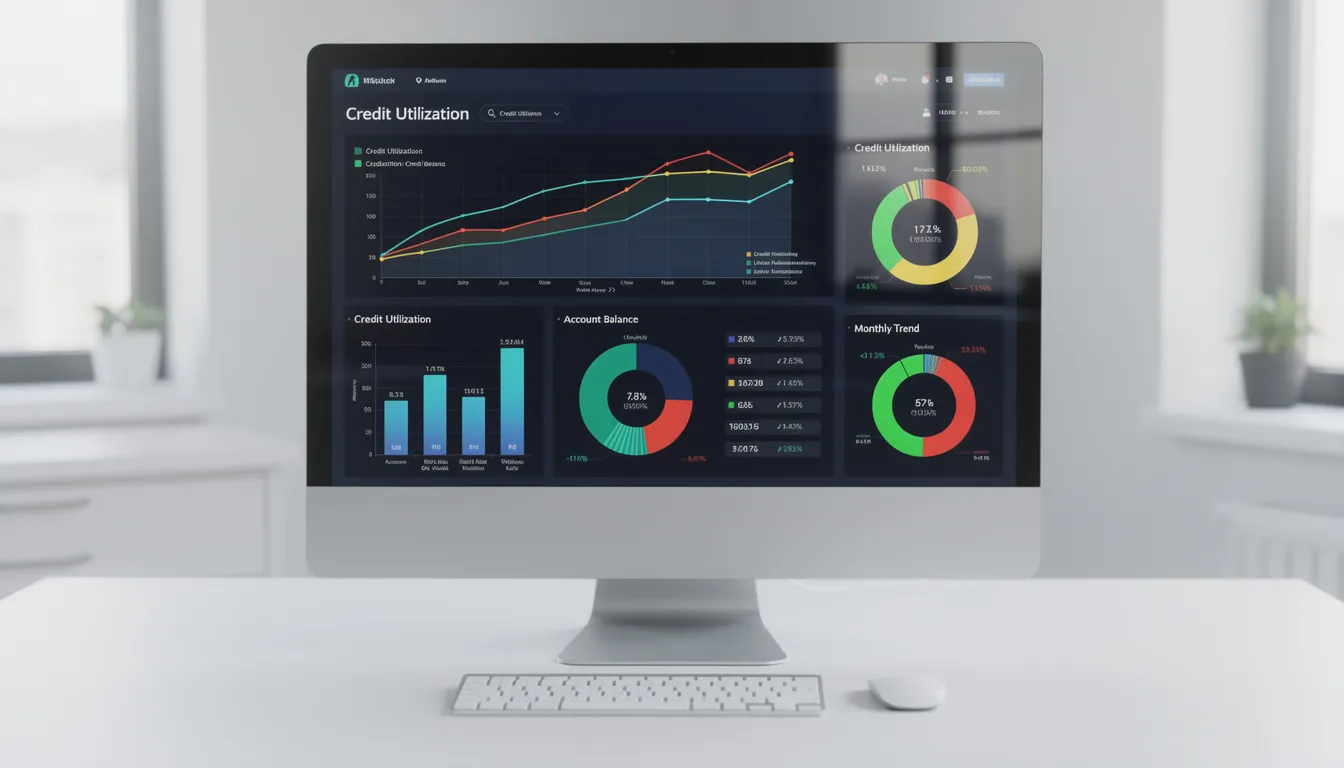
    The image shows a financial dashboard on a computer monitor, featuring various credit metrics such as credit scores, debt utilization trends, and payment histories. This dashboard serves as a critical tool for borrowers and lenders to manage their finances effectively in a tough market, helping them identify strategies like the snowball or avalanche method for debt repayment.

    Combining Credit Qualification Signals

    Lenders combine credit indicators with other data to develop a complete picture:

    • DTI estimates using reported obligations plus stated or verified income from the lender’s system
    • Payment shock analysis for mortgage and HELOC products—comparing proposed payments to current housing costs
    • Alignment with investor overlays ensuring loans meet secondary-market acceptability standards

    Continuous Monitoring vs. One-Time Pulls

    The difference between static credit pulls and continuous monitoring is critical for effective prioritization:

    • Event-based alerts notify teams when material changes occur—a collection resolved, utilization dropped more than 20 percentage points, or a new derogatory posted
    • Re-prioritizing the pipeline becomes possible when a monitored lead’s profile improves or degrades, moving them up or down in the queue automatically

    Each credit reporting agency updates records at different intervals, and borrowers’ situations change throughout the lending process. Altara Data supports both real-time bureau pulls and scheduled monitoring cycles, enabling lenders to keep prioritization models updated without manual rechecks or redundant pulls that increase costs.

    Credit Report Analysis: Extracting Actionable Insights

    A thorough credit report analysis is the foundation for managing multiple debts and achieving profitable growth, both for borrowers and the lenders who serve them. A credit report, available from major credit reporting agencies like Equifax, Experian, and TransUnion, offers a detailed snapshot of a consumer’s credit history—including open accounts, payment records, outstanding balances, and recent inquiries. By carefully reviewing this report, borrowers can identify which accounts carry the highest interest rates, spot late payments or negative marks, and pinpoint opportunities to improve their credit standing.

    For borrowers juggling multiple debts, the credit report becomes a roadmap for creating a targeted repayment strategy. By identifying high-interest accounts, consumers can prioritize which debts to pay down first, maximizing savings over time. Two popular strategies are the snowball method—where you pay off the smallest balances first for quick wins—and the avalanche method, which targets accounts with the highest interest rates to save the most money in the long run. Both approaches require a clear understanding of your accounts and interest rates, all of which are detailed in your credit report.

    Lenders and financial technology companies, such as Dispute Beast, empower borrowers by providing tools to analyze credit reports, track progress, and develop actionable plans. With access to a free credit report and ongoing credit monitoring, borrowers can manage their finances more effectively, resolve negative items, and create a strategy that supports both immediate and long-term financial goals. Ultimately, extracting actionable insights from your credit report is the first step toward taking control of your debt, improving your credit, and achieving profitable growth.


    Interest Rate Considerations in Borrower Prioritization

    Interest rates are a critical factor when prioritizing debt payments, especially in a tough market where every dollar counts. For borrowers aiming to achieve profitable growth and regain control of their finances, understanding the interest rates on each account is essential. The avalanche method is a powerful strategy that involves making minimum payments on all debts while directing extra funds toward the account with the next highest interest rate. By focusing on the highest interest rate debts first, borrowers can minimize the total interest paid and accelerate their journey to becoming debt-free.

    Alternatively, some borrowers may choose the snowball method, which prioritizes paying off accounts with the smallest balances first. This approach delivers quick wins and builds momentum, which can be motivating for those who need to see immediate progress. Both methods have their merits, and the best choice depends on individual financial goals and psychological preferences.

    Lenders and credit reporting agencies play a vital role in helping borrowers understand their interest rates and develop a personalized repayment plan. By providing clear information and guidance, these organizations enable borrowers to make informed decisions, prioritize payments effectively, and save money over time. In a competitive market, the ability to manage debt strategically—whether through the avalanche or snowball method—can make a significant difference in achieving financial stability and profitable growth.


    How Prioritization Improves Pipeline Efficiency

    Prioritizing borrowers using credit data produces measurable outcomes: higher contact rates with qualified leads, fewer touches per funded loan, and shorter cycle times from application to closing. For sales managers and operations leaders, these efficiency gains translate directly to lower costs and higher revenue per team member.

    Practical Lead Prioritization Frameworks

    Lending institutions typically implement tiered systems that route applications based on composite readiness scores:

    • Tiered queues (A/B/C buckets): High-readiness borrowers land in Tier A for immediate attention; moderate-readiness in Tier B for same-day follow-up; lower-readiness in Tier C for nurturing or automated outreach
    • Routing rules: Tier A mortgage leads route to senior loan officers or specialized teams with higher close rates; Tier C leads may route to inside sales or digital channels
    • Service-level targets: Same-hour outreach for Tier A leads, same-day for Tier B, and 48-hour automated contact for Tier C

    How Credit Data Drives Queue Management

    Credit qualification signals combine with behavioral data to create dynamic prioritization:

    • Credit score, DTI, and derogatory status provide the baseline assessment
    • Application completeness, channel source (direct vs. affiliate), and engagement signals (document uploads, portal logins) layer on top
    • Rules engines or predictive models continuously reshuffle queues as new credit events arrive from monitoring

    Concrete Efficiency Gains

    Organizations that implement credit-data-driven prioritization report:

    • Higher pull-through rates when teams focus first on borrowers with high approval odds and realistic closing timelines
    • Reduced time spent packaging files that will ultimately be declined due to obvious credit disqualifiers visible earlier in the process
    • Improved partner satisfaction for fintech platforms that send lenders more fundable applications, strengthening relationships and commission structures

    Integration with Existing Workflows

    Altara Data can be embedded in CRM and LOS workflows to operationalize prioritization:

    • Real-time borrower scoring and tagging within existing systems via API, so loan officers see priority indicators without switching screens
    • Automated alerts when monitored prospects cross configured risk or readiness thresholds, ensuring hot leads don’t go cold
    • Dashboards for sales managers to view pipeline stratified by readiness tier and credit risk band, enabling better resource allocation

    The goal is to create a process where the right borrowers receive attention at the right time, automatically, based on data rather than guesswork or squeaky-wheel dynamics.

    Operational Outcomes of Better Prioritization

    The business case for prioritizing borrowers extends beyond “working more leads.” Proper prioritization affects P&L performance, portfolio risk, and compliance posture across the organization.

    Revenue and Productivity Outcomes

    • Higher funded-loan volume per loan officer without increasing headcount—teams focus effort where it generates results
    • Lower cost per booked account thanks to fewer unproductive touches, faster decisioning, and less rework
    • Increased cross-sell and upsell when credit data reveals borrowers who qualify for multiple debts or products (e.g., HELOC plus first mortgage), identified early in the pipeline
    A diverse business team is engaged in a meeting within a modern conference room, discussing strategies to improve their lending pipeline performance amidst a tough market. They are analyzing credit reports and exploring methods like the snowball and avalanche methods to help borrowers manage multiple debts and achieve profitable growth.

    Risk and Portfolio Quality Improvements

    • Consistent application of credit policies across the pipeline because ranking is rules-based and data-driven, not dependent on individual loan officer judgment
    • Appropriate product steering that directs lower-quality applicants toward suitable products or partners before devoting full underwriting resources
    • Cleaner portfolios with fewer borderline files that create strain for collections and servicing teams in the long run

    Compliance and Governance Benefits

    • Documented, auditable rules for prioritizing borrowers using objective credit signals that can withstand fair lending examination
    • Reduced reliance on subjective judgment that can introduce disparate impact concerns
    • Centralized configuration of qualification and prioritization logic controlled by credit policy and risk teams, not scattered across individual loan officer practices

    Strategic Planning Benefits

    • Better forecasting of fundable volume because lead quality is visible early, enabling more accurate pipeline projections
    • Faster adaptation to investor guideline changes by updating prioritization rules centrally rather than retraining every front-line staff member manually

    Altara Data’s role is to provide standardized, configurable credit data pipelines and monitoring that support these outcomes across mortgage, consumer, and fintech lending programs. The platform delivers reports and scores that integrate with existing systems, enabling institutions to build and maintain prioritization capabilities without developing custom infrastructure.

    Borrower prioritization is ultimately about doing more with existing teams and data while staying within regulatory expectations—a balance that credit-data-driven systems help maintain.

    Implementing a Credit-Data-Driven Prioritization Framework

    Lenders can move from ad-hoc prioritization to a formal, data-driven framework through a structured implementation process. This is not a one-time project but the development of an ongoing operational capability that improves over time.

    Step-by-Step Implementation Approach

    Step 1: Define “approval-ready” criteria per product

    Work with credit risk, capital markets, and sales leadership to establish what qualifies as approval-ready for each product. Document score thresholds, DTI limits, derogatory lookback periods, and minimum account requirements. Ensure criteria align with investor guidelines and secondary market requirements.

    Step 2: Map required credit indicators to data sources

    Identify the specific data elements needed—scores, utilization, delinquency status, inquiry counts, monitoring events—and determine which systems currently provide them. Note gaps where data is unavailable or unreliable.

    Step 3: Implement a centralized credit data layer

    Either build internal infrastructure or partner with a platform like Altara Data to normalize and deliver bureau and monitoring data into CRM/LOS systems. Standardization is critical—loan officers and automated systems need consistent data formats to apply prioritization logic.

    Step 4: Configure prioritization rules or models

    Develop readiness scores or traffic-light tier assignments (A/B/C, Green/Yellow/Red) that can be executed automatically. Begin with rules-based logic that credit policy teams can control; consider machine learning models later as data accumulates.

    Step 5: Integrate prioritization outputs into frontline workflows

    Ensure that queues, routing assignments, alerts, and reporting dashboards reflect prioritization status. Loan officers should see priority indicators within their normal workflow, not in a separate system they must check manually.

    Step 6: Monitor performance and refine rules

    Track pull-through rates, time-to-approval, and default rates by priority tier. Review results quarterly and adjust rules to improve accuracy. Save money by identifying which signals actually predict fundability versus which create false positives.

    Change Management Considerations

    • Train sales and operations teams to trust and use prioritization signals rather than reverting to old habits
    • Ensure transparency so management can explain why certain borrowers are ranked above others
    • Create feedback loops so loan officers can flag cases where prioritization seems incorrect, enabling model refinement

    Altara Data is built to support enterprise deployment of these capabilities: white-label credit monitoring, dispute automation to resolve inaccuracies, and credit-event alerting that lenders can embed under their own brand and within their own workflows. The platform handles the data infrastructure so lending teams can focus on what they do best—closing loans with qualified customers.

    Prioritizing borrowers using credit data is not a one-time project but an ongoing operational capability. Institutions that develop and refine this capability create sustainable competitive advantages: lower acquisition costs, higher close rates, cleaner portfolios, and the ability to manage pipeline effectively in any market condition. The combination of accurate credit data, configurable rules, and continuous monitoring creates a foundation for profitable growth that scales with the business.

    Conclusion and Future Outlook

    Successfully managing multiple debts and achieving profitable growth requires a comprehensive, strategic approach—one that starts with a detailed credit report analysis and incorporates smart interest rate considerations. By leveraging the insights found in their credit reports, borrowers can identify areas for improvement, prioritize payments using proven methods like the snowball or avalanche approach, and create a plan that maximizes savings and minimizes risk.

    As the credit and lending market continues to evolve, staying informed about changes in interest rates, credit reporting practices, and lender requirements is more important than ever. Borrowers who remain proactive—regularly reviewing their credit reports, adapting their strategies, and utilizing tools from companies like Dispute Beast—are better positioned to secure their financial future and achieve their goals.

    Whether you’re a borrower seeking to regain control of your finances or a lender aiming to support your customers’ journey, the path to profitable growth is built on knowledge, discipline, and the right strategy. By embracing best practices and leveraging the latest technology, both borrowers and lenders can navigate the complexities of the market, reduce risk, and create lasting financial success.

    Read the Ultimate Dispute Beast FAQ for answers to all your credit repair questions.

    Get your free Dispute Beast account and start sending your attacks with the press of one button at https://disputebeast.com.

    Keep Attacking Every 40 Days: Dispute Beast continuously monitors and helps eliminate new negatives as they appear—empowering you to take control of your credit and your financial future.

  • Soft Credit Pull vs Hard Credit Pull: What Lenders Need to Consider

    Credit pulls are foundational to loan origination, prequalification, portfolio monitoring, and compliance workflows across the lending industry. For lending product teams, mortgage brokers, and fintech compliance teams, understanding the distinction between soft credit pull vs hard credit pull is not merely academic—it directly influences approval rates, borrower experience, and adherence to regulatory frameworks including FCRA, ECOA, and GLBA.

    This article examines soft and hard credit inquiries from an operational and compliance perspective, addressing how lenders design workflows, manage bureau costs, and balance risk assessment with borrower friction. Altara Data operates as enterprise credit infrastructure, which means the focus here is on technical, operational, and regulatory implications rather than consumer credit tips.

    This article does not provide legal advice. Readers should consult qualified legal or financial professionals for guidance on compliance or regulatory matters.

    What Defines a Soft vs Hard Credit Pull

    A credit pull, in a lending context, refers to a request for access to a consumer’s credit file from one of the major credit bureaus—Experian, Equifax, or TransUnion—for a permissible purpose under the Fair Credit Reporting Act. Both hard and soft inquiries require permissible purpose documentation, but they differ in how they are classified, who can view them, and how credit scoring models treat them. Lending product teams, mortgage brokers, and other financial institutions may initiate these credit pulls as part of their evaluation processes.

    Hard inquiries are associated with formal credit applications and are visible to other lenders reviewing the borrower’s credit report. Soft inquiries are generally tied to prescreening, account review, or non-credit decisions and are typically visible only to the consumer. A credit card issuer may perform either a hard or soft inquiry when evaluating an application or reviewing an account. Classification depends on both the purpose coded in the request (such as “account review” versus “new credit”) and the bureau’s business rules.

    Hard pulls are typically required for final underwriting of mortgage loans, auto loans, and personal loans. Soft pulls are commonly used for prequalification flows, marketing prescreen lists, and ongoing customer monitoring. During the credit pull process, lenders assess a borrower’s credit history, including past accounts and payment behavior, to determine creditworthiness. Both inquiry types remain on a credit file for up to two years, but only hard inquiries are treated as potential risk signals in most credit scoring models.

    A professional is seated at a sleek desk in a modern office, intently reviewing financial documents displayed on a tablet. The setting suggests a focus on assessing credit information, possibly related to credit reports and the impact of hard and soft inquiries on financial health.

    Key Characteristics of a Hard Credit Pull

    A hard credit pull is a credit report request coded for a new credit decision—such as a mortgage application, unsecured installment loan, or credit card account opening. A hard inquiry occurs after a borrower submits a formal application and consents to the credit check, typically documented through e-sign or paper disclosures.

    Major scoring models like FICO 8, FICO 10, and VantageScore 4.0 treat hard credit checks as potential indicators of higher future default risk. The impact on a credit score is generally modest—usually just a few points per inquiry, averaging around five points—but can accumulate if a borrower has too many hard inquiries in a short period.

    Hard inquiries remain on a credit report for up to two years, though most credit scoring models only count them for approximately 12 months, with the effect diminishing over time. Importantly, multiple hard inquiries for the same type of loan (such as a mortgage loan or auto loan) within a rate shopping window—typically 14 to 45 days depending on the scoring model—may be deduplicated and treated as a single inquiry.

    Beyond the score itself, lenders often incorporate the pattern of hard credit pulls into their internal decisioning logic. For example, multiple recent inquiries for subprime auto financing may be flagged as an underwriting feature, regardless of how the scoring models treat them.

    Key Characteristics of a Soft Credit Pull

    A soft credit pull is a credit report request coded for purposes like prescreen, account review, firm offer of credit, or consumer disclosure. Unlike hard inquiries, soft credit inquiries do not signal “new credit application” to bureaus or scoring models and therefore do not affect your credit score.

    Soft inquiries are typically visible only to the consumer on their own credit report and to the entity that pulled the data—not to other external lenders. This makes soft pulls attractive for lenders seeking to prequalify borrowers or review existing accounts without creating visible inquiry activity.

    Lenders commonly use soft pulls for:

    • Checking your credit report for errors or monitoring purposes (“Check your credit” is considered a soft inquiry)
    • Online prequalification flows (“Check your rate without impacting your credit”)
    • Ongoing portfolio reviews for existing customers
    • Triggered marketing campaigns and firm offers of credit
    • Identity verification in the screening process

    Some bureaus and data resellers offer limited-file soft pull products that provide credit attributes without full tradeline details, reducing data exposure and simplifying compliance for certain use cases. It is important to distinguish between soft pulls used for marketing (prescreen offers) and those used in operational risk monitoring (account review), as each has different compliance requirements.

    Operational Differences for Lenders

    The choice between soft and hard pulls affects how lenders design their funnels, integrate bureau products via API, and manage vendor contracts and pricing tiers. Product teams must decide at what funnel stage to trigger a soft pull versus a hard pull, and how those decisions impact approvals, drop-off rates, and bureau costs.

    Loan Origination Systems (LOS), Point of Sale platforms (POS), and credit decision engines are often configured to support both inquiry types with different API endpoints, consent flows, and auditable logs. Soft pulls are generally priced lower in bureau contracts, making them attractive for lead-scoring and prequalification at scale, whereas hard pulls are reserved for applications more likely to convert.

    Mortgage brokers may run multiple soft pulls during a pipeline’s life cycle—at prequalification, during re-checks before final approval—but convert to a hard pull when preparing to issue a commitment letter and generate disclosures. Altara Data’s role in these workflows is to centralize credit data, standardize formats, and support both inquiry types in monitoring and dispute-related workflows.

    Integration and Workflow Design

    Engineering teams must configure different request types and permissible purpose codes when calling bureau or intermediary APIs. For example, a prequalification request would use a soft pull code, while a formal credit application triggers a hard pull code.

    Consent and disclosure UX differ between pull types. Soft pulls may use streamlined consent language, while hard pulls often require explicit FCRA and adverse action disclosures integrated into e-sign flows. Systems must log which type of pull was used, for which product, and at what timestamp to support later audits, dispute handling, and regulatory investigations.

    Robust architectures often separate internal datasets for soft-pull monitoring and hard-pull underwriting decisions, ensuring each pipeline has clear data lineage and retention policies. Product teams should also align soft-pull logic with “offer of credit” rules to avoid accidentally creating firm offers without compliant terms and criteria.

    Cost Structure and Volume Management

    Bureau contracts typically price soft inquiries differently from hard inquiries. Industry data suggests soft pulls may cost $1-3 per inquiry, while hard pulls can range from $5-15 depending on volume contracts and bundled services.

    Fintechs running high-volume prequalification or rate-check flows typically rely on soft pulls to control costs and protect conversion rates. Many lenders tier their process: soft pull at initial application, hard pull only after the applicant crosses certain internal thresholds such as completed income verification or passed KYC checks.

    Monitoring inquiry volumes per bureau and per permissible purpose code is essential to ensure usage aligns with contract terms and does not trigger unexpected fees or audits. Optimized systems can reduce hard pull volumes by 30-50% through intelligent soft-pull-first strategies.

    Risk and Compliance Considerations

    Understanding the differences between a hard inquiry vs a soft inquiry is crucial for compliance and risk management. Both soft and hard pulls are subject to FCRA, ECOA (for adverse action), and GLBA privacy and data security rules. The distinction mainly influences scoring impact and how inquiries must be disclosed and recorded.

    Misclassifying pulls—coding a credit-application decision as soft, for example—can create regulatory risk, mislead borrowers, or distort internal risk analytics. Compliance teams must review when a pull is triggered, what legal basis is recorded (permissible purpose), and how adverse actions are documented if credit-related decisions are made.

    In the context of inquiry vs, a hard inquiry typically occurs when a lender checks your credit for a loan or credit application, which can impact your credit score and is visible to other lenders. A soft inquiry, on the other hand, happens when you check your own credit or when a company checks your credit for pre-approval offers, and it does not affect your credit score.

    Soft pulls used for marketing prescreening require firm-offer criteria and opt-out handling per FCRA, whereas account-review soft pulls for existing customers rest on an existing relationship. Enterprise platforms like Altara Data support audit trails, event logs, and dispute workflows that treat soft and hard inquiries differently but consistently with bureau guidelines.

    The image depicts a secure data center filled with rows of server racks illuminated by blue lighting, symbolizing the importance of protecting sensitive credit information. This environment is crucial for managing credit reports and ensuring secure credit inquiries, whether they are soft pulls or hard credit checks.

    FCRA, Permissible Purpose, and Documentation

    Under FCRA, any pull—soft or hard—must have a documented permissible purpose. Common permissible purposes include:

    Purpose CategoryTypical Use CasePull Type
    Credit transactionMortgage or loan applicationHard
    Account reviewExisting customer monitoringSoft
    Firm offer of creditPrescreen marketingSoft
    EmploymentBackground check in hiring processSoft
    Insurance underwritingPolicy pricingSoft

    Lenders must store which permissible purpose was used for each inquiry, ideally with immutable logs and clear linkage to a customer or application record. Regulators and bureaus may scrutinize patterns of high-volume soft pulls for marketing to ensure that criteria and opt-out processes comply with prescreen rules.

    When a decision adverse to the applicant is based on credit report data—even after a soft pull used in a preliminary decision—ECOA and FCRA adverse action notice requirements may still be triggered. Compliance teams should periodically review sample inquiries and decision records to verify that inquiry type, purpose code, and disclosure wording are aligned.

    Data Privacy, Security, and Dispute Handling

    Both soft and hard pulls involve handling sensitive consumer credit information subject to GLBA, state privacy laws, and contractual security service requirements from the bureaus. Lenders and platforms must ensure encryption, strict access controls, and proper retention policies for pulled credit data.

    Borrowers may initiate disputes about credit information in their credit file regardless of whether it was first obtained via soft or hard pull. Lenders must have standardized processes to route such disputes to bureaus or furnishers.

    Consider a scenario where a soft pull is misdirected to the wrong consumer file due to a data entry error. Even though no score impact occurs, this creates reputational and regulatory risk. A mature financial institution’s internal controls would detect such errors through reconciliation processes that compare requested identifiers against returned data, flagging mismatches for immediate remediation.

    Minimizing the Impact of Hard Inquiries

    For lenders and borrowers alike, understanding how to minimize the impact of hard inquiries is essential for maintaining strong credit profiles and supporting healthy financial outcomes. Every hard credit inquiry—triggered when a lender reviews a consumer’s credit report as part of a loan or credit card application—can temporarily affect your credit score. While the effect is typically modest, multiple hard inquiries in a short period can signal increased risk to credit scoring models and may influence underwriting decisions.

    Unlike hard inquiries, soft inquiries—such as those generated when you check your own credit report, receive a pre-approved credit card offer, or undergo a background check as part of a screening process—do not affect your credit score. Soft credit checks are visible only to the consumer and do not signal new credit risk to lenders or credit bureaus.

    To minimize the impact of hard credit inquiries, both lenders and borrowers should be strategic about when and how credit checks are performed. Here are several best practices:

    • Limit the Number of Credit Applications: Submitting multiple credit applications—whether for credit cards, auto loans, or personal loans—within a short period can result in multiple hard inquiries. Most credit scoring models, including those used by major credit bureaus, treat multiple hard inquiries for the same type of credit (such as a mortgage loan or auto loan) within a defined rate shopping window—typically a two week period—as a single inquiry. This approach helps consumers shop for the best rates without unduly affecting their credit score.
    • Leverage Prequalification and Preapproval Flows: Lenders can design workflows that use soft credit checks for initial prequalification, allowing borrowers to check their eligibility and indicative pricing without triggering a hard credit inquiry. Only when the borrower decides to proceed with a formal application should a hard pull be initiated. This minimizes unnecessary hard inquiries and supports a positive borrower experience.
    • Monitor for Unauthorized Inquiries: Regularly checking your own credit report is a best practice for detecting unauthorized hard inquiries, which can be a sign of identity theft or errors in the credit file. If an unfamiliar hard inquiry appears, it’s important to notify the credit bureaus promptly and consider placing a credit freeze to prevent further unauthorized credit checks.
    • Consider Credit Limit Increases on Existing Accounts: Instead of applying for multiple new credit cards, borrowers may request a credit limit increase on an existing account. Some credit card issuers process these requests with only a soft inquiry, reducing the risk of accumulating too many hard inquiries on your credit report.
    • Time Applications Strategically: When shopping for a loan or credit card, submitting all applications within a short period—ideally within the same two week period—can help ensure that most credit scoring models count them as a single inquiry. This is especially important for rate shopping on products like mortgages, auto loans, or student loans.
    • Understand Inquiry Duration: Hard inquiries remain on your credit report for up to two years, but most credit scoring models only factor them into your score for the first 12 months. Their impact on your credit score diminishes over time, while soft inquiries stay on your credit report for the same duration but do not affect your score.

    By implementing these strategies, lenders can design credit application processes that protect borrower credit scores and reduce friction in the customer journey. Borrowers, in turn, can maintain better financial health by being mindful of how and when they apply for new credit, monitoring their own credit report, and understanding the key differences between hard and soft inquiries.

    Ultimately, a well-informed approach to credit inquiries—supported by transparent lender workflows and proactive borrower habits—ensures that both parties can achieve their goals without unnecessary impact on credit scores or financial well-being.

    When Lenders Use Each Type

    Choosing between soft vs hard pulls is a strategic decision at each stage of the borrower journey: marketing, prequalification, application, underwriting, and account management. Mortgage teams, auto lenders, and digital consumer lenders often use soft pulls up front to qualify leads, converting to hard pulls only when there is clear intent to proceed.

    Institutional practices vary. Some banks still begin with a hard pull for most unsecured credit lines, while many fintechs have moved to soft-pull-first funnels to reduce perceived friction. Product owners should map each step of their funnel to a clearly defined inquiry type, with internal documentation explaining the rationale.

    Common Use Cases for Soft Pulls

    Typical B2B use cases for soft pulls include:

    • Online prequalification widgets for mortgages and HELOCs
    • “Check your rate” flows for personal loans
    • Pre-approved credit card offers
    • Periodic portfolio reviews by existing creditors
    • Identity verification during onboarding

    Lenders use soft-pull data to segment leads, set preliminary pricing ranges, and decide whether to request additional documentation before converting to a full application. Some lenders use soft pulls shortly before funding—for example, 5-10 days before closing a mortgage loan—to check for new tradelines or significant changes without adding another hard inquiry.

    Soft pulls also support ongoing credit monitoring use cases where the institution needs to detect risk changes (such as utilization spikes or new delinquencies) while minimizing impact on the customer’s payment history record. These soft inquiries work well for portfolio risk management at scale.

    Common Use Cases for Hard Pulls

    Hard pulls are typically required for final underwriting of major credit products:

    • Conforming mortgages, FHA/VA loans, and non-QM products
    • Auto loans and car loans
    • Credit cards and new loan or credit card applications
    • Unsecured personal loans
    • Student loan applications (private and PLUS loans)

    Applying for multiple credit cards in a short period can result in several hard inquiries, which may negatively impact your credit score.

    Many institutions will not issue a binding approval, set final loan terms, or generate closing disclosures until at least one hard credit inquiry has been obtained and validated. Some lenders, particularly large banks, use hard pulls for credit limit increase requests or product changes because their policies equate those changes with new credit extensions.

    For mortgages, lenders may perform multiple hard pulls across a pipeline’s timeline. Scoring models typically count multiple inquiries as a single inquiry if they occur within a defined two week period or rate shopping window, helping protect the borrower’s credit score during competitive bidding.

    Impact on Borrower Experience and Pipeline

    Inquiry type influences borrower perception, funnel conversion rates, and the volume of customer service questions and disputes. From a lender’s perspective, minimizing unnecessary hard pulls can reduce friction, avoid negative sentiment, and support more flexible experimentation with prequalification criteria.

    Modern digital funnels frequently advertise “soft pull only” during early stages to reassure applicants, but compliance teams must ensure that marketing claims match actual bureau request types. Internal analytics teams should track metrics like drop-off rates at the credit-check step, percentage of soft-pull leads that convert to hard-pull applications, and subsequent default rates.

    Industry data suggests soft-pull preapprovals can boost application completion rates by 40-60%, while over-reliance on early hard pulls correlates with approximately 20% higher abandonment rates.

    The image shows a diverse group of professionals collaborating around a conference table, each with laptops open, engaged in discussion. This setting emphasizes teamwork and communication, which are essential in understanding complex topics like credit reports and the differences between soft and hard credit inquiries.

    Designing a Prequalification-First Funnel

    A typical prequalification-first flow works as follows:

    1. Borrower enters minimal data on a website or mobile app
    2. System triggers a soft credit check
    3. Indicative pricing and eligibility bands are displayed
    4. Borrower decides whether to proceed to full application
    5. Hard pull is triggered only upon formal application submission

    Product teams can use soft-pull insights—score bands, utilization levels, recent delinquencies—to gate when to request more invasive steps like document upload, income verification, or a hard pull. This approach improves borrower perception and reduces application abandonment, especially in price-sensitive segments.

    UX copy should clearly distinguish between the soft-pull stage (“no impact to credit scores”) and the hard-pull stage (“required to finalize approval”). Legal review of wording is essential to avoid misleading statements about how many hard inquiries will appear on your credit or how they might affect your credit score.

    Monitoring Existing Portfolios Without Score Impact

    Lenders use periodic soft pulls to monitor existing credit portfolios for early warning signs. These signals might include increased utilization, emerging delinquencies, or new high-risk tradelines that could indicate changes in a borrower’s financial health.

    Soft-pull monitoring programs support:

    • Risk-based line management
    • Collections prioritization
    • Cross-sell strategies
    • Early fraud and identity theft detection

    At scale, this requires automated data ingestion, attribute calculation, and rules-based workflows. Enterprise platforms like Altara Data typically operate in this space, enabling credit operations teams to manage continuous monitoring without adding unauthorized hard inquiry records to borrower files.

    Operations and compliance teams should document frequency, permissible purpose, and data handling for these monitoring pulls, ensuring alignment with both bureau rules and privacy regulations. Soft inquiries stay on file for the same duration as hard inquiries but do not create the same risk signals in credit scoring models.

    How Altara Data Fits Into Soft vs Hard Pull Strategies

    Altara Data serves as infrastructure for lenders, mortgage brokers, and fintech platforms that need unified monitoring and dispute automation across both soft and hard pulls. The platform simplifies operational complexity while maintaining compliance controls required by credit bureaus and regulators.

    Teams can use Altara Data to centralize credit data used in prequalification, underwriting, and post-origination monitoring. This makes it easier to analyze performance across different inquiry strategies and understand how credit card companies, potential employers conducting background checks, and other permissible users interact with credit files.

    The platform is designed for B2B workflows: integration with LOS/POS systems, credit ops dashboards, and compliance-ready audit trails. Unlike consumer-facing credit karma-style tools, Altara Data focuses on enterprise needs—supporting teams that must remove legitimate hard inquiries when appropriate, handle unauthorized inquiries through proper dispute channels, and maintain accurate records of all credit applications.

    Lenders that understand and intentionally design around the key differences between soft and hard credit checks are better positioned to optimize risk assessment, maintain compliance, and deliver a borrower experience that supports pipeline velocity without compromising underwriting integrity.

  • What Causes Loan Fallout and How Credit Data Can Reduce It

    Loan fallout refers to locked or committed loans that fail to reach closing—whether due to borrower withdrawal, lender denial, or a decision to move to another lender before funding. For mortgage brokers, lending operations teams, and loan officers, fallout represents more than a missed opportunity; it translates directly to lost revenue, wasted underwriting resources, and hedge exposure on rates that never materialize into funded volume. This article examines what drives fallout in mortgage pipelines and how continuous credit data visibility can reduce it.

    Consider a mid-size mortgage lender with $500M in annual lock volume. If pipeline fallout runs at 20–25% instead of a target 15%, that unexplained variance can erode margins by 20–30 basis points—money that disappears into hedging losses, repricing costs, and operational drag. For lending teams operating in competitive or volatile rate environments, understanding the root causes of fallout and implementing systems to predict it earlier is a margin-protection priority. Maintaining the right financial balance—such as accurate asset balances and proper financial ratios—is crucial for loan qualification and optimizing investment property profitability, helping to reduce the risk of loan fallout.

    The focus here is on mortgage lending operations, secondary marketing, and pipeline management—not consumer credit advice. Altara Data operates as an enterprise credit data infrastructure provider, offering white-label credit monitoring that lenders embed into their platforms to track borrower credit readiness throughout the lock period. Fallout data is essential for a mortgage company’s hedging strategy and risk management, as accurate fallout information directly impacts profitability and operational decisions.

    To minimize fallout, lenders must ensure correct and complete fallout data, as data integrity is critical for reliable operational decisions and predictive analytics. Setting a strategic course for managing fallout risk is also vital, enabling lending operations to navigate changing market conditions with deliberate planning and effective risk management.

    What loan fallout means in lending operations

    From an operational standpoint, loan fallout describes locked loans that do not fund. This includes outright cancellations, denials during underwriting or at clear-to-close, and loans that reprice or migrate to a competitor before closing. Loans can exit the pipeline for various reasons, including borrower, market, and operational factors. The fallout rate serves as a key production metric, reflecting the percentage of applications or locks that exit the pipeline without reaching the funding stage.

    Lending teams typically distinguish between several types of fallout depending on where and why the loan exits the pipeline:

    Lock fallout captures loans that were rate-locked but never close. This is the most visible category for secondary marketing teams because it directly affects hedge positions. When a borrower locks a rate, the lender often hedges that commitment in the TBA (to-be-announced) market. If the loan falls out, the lender must either pair off the hedge at a loss or absorb the mismatch.

    Pipeline fallout is broader, encompassing any loan application in-process that exits before funding—whether before or after a rate lock. This includes applications that never reach underwriting, conditional approvals that stall during documentation, and clear-to-close loans that fail at the last stage.

    Hedge fallout refers specifically to the variance between expected and actual pull-through for hedging purposes. Secondary marketing teams model pull-through rates to determine how much of their locked pipeline will actually fund. When actual pull-through falls short of projections, the hedge position becomes misaligned, creating price risk.

    Fallout shows up across several internal reports. Lock desk reporting tracks lock-to-close conversion rates by loan officer, channel, and product. Fallout reports also document the methodology, results, and performance evaluation of fallout prediction models, supporting operational decisions and risk management. Secondary marketing P&L statements reflect hedge performance, including gains or losses from fallout-driven mismatches. Margin reports capture the cumulative effect of fallout on profitability, especially during periods of rate volatility.

    Common internal metrics include pull-through rate (the percentage of locked loans that fund), lock-to-close conversion, and stage-by-stage fallout analysis—tracking attrition from pre-approval through conditional approval to clear-to-close. These metrics help operations teams identify where in the process loans are most likely to exit.

    For example, during a rate rally in late 2023, many lenders experienced unexpected lock fallout as borrowers with existing locks sought to re-lock at lower rates or moved to competing lenders offering better pricing. Lenders who had hedged based on historical pull-through assumptions found themselves over-hedged, absorbing losses when actual closings fell short of projections.

    The image depicts mortgage professionals intently reviewing pipeline data on multiple computer monitors, analyzing key factors such as interest rates, borrower's income, and fallout risk to ensure efficient loan application processing and funding decisions. Their focus on data analysis highlights the importance of managing financial stress and predicting approval dates in the lending industry.

    The most common causes of loan fallout

    Fallout is multi-factor. It results from borrower behavior, credit and eligibility changes, collateral issues, pricing dynamics, and operational friction. For brokers, loan officers, and lending ops teams, understanding these categories helps target interventions where they can have the most impact.

    Borrower-driven causes account for a substantial share of fallout. Borrowers shop for mortgages across multiple lenders, and many will switch to a competitor offering a better interest rate, lower fees, or more favorable terms. Others decide to delay or cancel a home purchase or refinance entirely—often due to life changes, financial stress, or second thoughts about timing. A meaningful percentage of fallout also stems from non-response or application abandonment, where borrowers fail to return documentation, disclosures, or verifications within required timeframes. Some borrowers have trouble documenting income or meeting lender requirements, which leads to increased fallout as their applications are unable to proceed or are declined.

    Credit and eligibility changes represent a category where timing matters significantly. A borrower who qualified at application may no longer qualify by closing. New trade lines—such as an auto loan or furniture financing—can push debt-to-income ratios beyond guidelines. Utilization spikes on existing credit cards can drop scores below product thresholds. New derogatory items, disputes, or public records (including bankruptcy filings) appearing mid-process can trigger denials. Changes in the borrower’s income, whether from job loss, reduced hours, or a switch in employment, can also disqualify the loan during underwriting verification. In many cases, loan applications have fallen out due to income verification or eligibility issues, especially when borrowers cannot meet the strict criteria of conforming loan programs.

    Property and collateral issues emerge during the appraisal and title phases. An appraisal shortfall—where the property value comes in below the contract purchase price—can force a renegotiation or cause the deal to collapse if neither party adjusts. Property condition or occupancy discrepancies discovered during inspection may violate lender guidelines. Title issues such as undisclosed liens, boundary disputes, or clouded ownership can delay or kill the transaction.

    Pricing, rate, and market dynamics drive fallout in ways that are often outside the lender’s direct control. Rapid rate rallies make locked rates uncompetitive, prompting borrowers to renegotiate, cancel, or move to another lender. During a week when rates drop 50 basis points, lenders routinely see fallout spike as clients seek to capture the savings. Internal repricing errors or system failures can also cause re-disclosures and delays, frustrating borrowers and increasing fallout probability.

    Operational and process friction contributes to fallout when cycle times drag or communication breaks down. Long gaps between the application date, underwriting review, and clear-to-close create windows for borrower circumstances to change or for competitors to capture the deal. Inconsistent communication from loan teams—failure to set expectations, answer questions, or provide timely updates—erodes borrower confidence. Documentation requests that feel duplicative or unclear lead to abandonment, especially among borrowers juggling busy schedules and competing priorities.

    For example, during the first quarter (Q1) 2024, a wholesale lender tracking fallout by cause found that 35 percent of fallout was attributable to borrowers moving to another lender for a better rate, 22 percent to credit-related eligibility changes discovered mid-process, and 15 percent to appraisal shortfalls. The remaining 28 percent was split among operational delays, non-response, and title issues. This data also showed that a significant number of loan applications had fallen out due to income verification or eligibility problems. Overall, the approval rate for commercial real estate loans during this quarter was around 65 percent, with 35 percent rejected or fallen out. This type of analysis helps lending operations prioritize interventions.

    Assessing fallout risk in the lending process

    Assessing fallout risk is a crucial component of the lending process, directly impacting the stability and profitability of mortgage pipelines. Fallout risk refers to the probability that a loan application will not progress to funding, whether due to borrower default, changes in financial circumstances, or other disruptions that prevent the loan from closing. Understanding and managing this risk is essential for lenders aiming to maintain healthy margins and for borrowers seeking successful loan approval.

    Lenders evaluate fallout risk by analyzing a range of factors at every stage of the loan application. Key considerations include the borrower’s credit profile, income stability, debt-to-income (DTI) ratio, and the overall value of the property. For example, a borrower with a strong credit history, consistent income, and a low DTI ratio presents a lower fallout risk compared to someone with recent credit issues or variable earnings. The type of loan, loan amount, and loan term also play significant roles in determining risk levels.

    Industry standards, such as those set by Fannie Mae, provide a framework for assessing fallout risk. Lenders must verify that borrowers meet strict eligibility criteria, including minimum credit scores, maximum DTI ratios, and documented income. These guidelines help ensure that only qualified borrowers move forward, reducing the likelihood of fallout due to ineligibility or last-minute surprises.

    Financial stress is another major factor influencing fallout risk. Borrowers facing unexpected expenses, job loss, or reduced income may struggle to meet loan requirements or keep up with payments, increasing the probability of fallout. Lenders must carefully review the borrower’s financial situation at both the application date and approval date, looking for signs of instability that could affect the loan’s success.

    Price risk, or the potential for property values to decline, is also a critical consideration. If the value of the property falls below the loan amount, borrowers may find it difficult to refinance or sell, raising the risk of default. Lenders mitigate this by conducting thorough property appraisals and monitoring market trends to ensure the collateral remains sufficient throughout the lending process.

    Timing is essential in fallout risk assessment. The gap between the loan application date and approval date can expose lenders to changes in the borrower’s financial profile or market conditions. For instance, a borrower who appears qualified at application may experience a drop in income or take on new debt before the approval date, altering their risk profile. Continuous review and timely verification of credit, income, and property value are crucial to managing this dynamic risk.

    To reduce fallout risk, lenders can implement robust risk assessment protocols, provide borrower education, and offer resources to help clients manage debt and financial stress. Proactive communication and regular credit monitoring enable lenders to identify potential issues early and work with borrowers to address them before they become deal-breakers.

    Borrowers, in turn, can lower their fallout risk by maintaining a strong credit history, managing their debt responsibly, and ensuring their income remains stable throughout the loan process. Staying informed about the factors that affect loan approval and working closely with their lender can make a significant difference in achieving a successful outcome.

    In summary, assessing fallout risk is a foundational step in the mortgage lending process. By carefully analyzing credit, income, debt, property value, and timing, lenders can determine the likelihood of a loan funding and take proactive measures to manage risk. This not only protects the lender’s business but also supports borrowers in achieving their homeownership or refinancing goals.

    Why credit timing plays a major role

    Credit timing refers to when in the loan process lenders access credit data—and how often that data is refreshed. The traditional pattern is static: one hard pull at application or pre-approval, possibly another refresh just before closing, and little structured visibility in between. This approach creates blind spots that contribute directly to fallout.

    During a 45- to 60-day lock period, borrowers continue their financial lives. They may open new tradelines, increase credit card balances, miss payments, or take on additional debt. These changes can shift scores, alter debt-to-income ratios, and push borrowers outside product eligibility—often without the lender’s knowledge until it’s too late. If your financial circumstances change during this period, it’s important to explore all available financial options to find the best solution for your situation.

    Credit drifts between the initial pull and underwriting are a primary driver of unexplained fallout. A borrower approved at 720 FICO with a 38% DTI may, by closing, have financed a car purchase, taken on a personal loan, or maxed out a credit card. When the lender runs a final verification, the score has dropped to 680 and the DTI is now 45%—exceeding Fannie Mae guidelines for the locked product.

    Late-stage surprises are particularly costly. A final soft or hard pull just before closing may reveal new obligations that were not present at approval. At that point, options are limited: the loan may need to be restructured, repriced, or denied. Conditions cleared based on outdated credit assumptions no longer hold, and the deal collapses. Understanding the reality of both market conditions and borrower behavior is essential for accurate risk management and minimizing unexpected fallout.

    Example 1: A borrower locks a purchase loan on March 1 with a 725 FICO and 36% DTI. On April 10, just before clear-to-close, a refresh reveals a new auto loan tradeline and a 12% increase in revolving utilization. The score has dropped to 695 and the DTI has risen to 44%. The loan is denied at clear-to-close, and the lock expires unfunded—representing both lost revenue and hedge exposure.

    Example 2: A refinance application in Q4 2025 proceeds through underwriting with a 680 FICO. Mid-process, the borrower’s score drops to 660 due to a late payment on a credit card. This triggers LLPA (loan-level price adjustment) changes that raise the borrower’s rate by 50 basis points. The borrower, frustrated by the unexpected repricing, abandons the loan and seeks a competing lender.

    In volatile rate environments—such as 2020 through 2023—lenders that only check credit at two static points (application and closing) experience higher unexplained pipeline fallout. Without visibility into what happens between those checks, operations teams cannot anticipate or intervene before fallout occurs.

    The image depicts a calendar alongside financial documents and a clock, symbolizing the importance of timing in loan applications and the potential fallout risk associated with interest rates and borrowers' income. This visual representation emphasizes the crucial factors lenders and clients must analyze to manage financial stress and ensure successful funding.

    How lenders track borrower readiness over time

    Borrower readiness signals are credit indicators that show whether a borrower remains on track to qualify and close. From a lender’s perspective, these signals include score movements, new tradelines, utilization changes, payment behavior, and the appearance of derogatory items or public records. Tracking these signals continuously—rather than at two static points—transforms pipeline management from reactive to proactive.

    The industry has evolved from static credit checks to continuous or event-driven credit monitoring for pipeline management. Rather than waiting for a final refresh at closing, leading lenders now implement daily or weekly soft-pull monitoring during the lock or pre-approval window. This approach provides real-time visibility into borrower credit health without requiring a new hard inquiry.

    A borrower readiness monitoring framework typically includes several key elements. Configurable soft-pull monitoring cadences allow lending teams to define how often credit data is refreshed—daily, weekly, or at specific milestones (e.g., day 30 and day 45 of the lock period). Event-based alerts notify loan officers when specific credit events occur: a new tradeline appears, utilization exceeds a defined threshold (e.g., 30% or 50%), a payment is reported 30 days late, or a score drops by more than 20 points. Score band movements that may trigger repricing or guideline rechecks are flagged for immediate review, allowing teams to intervene before the loan is rejected at closing.

    Integration points for readiness signals vary by lender infrastructure. LOS (loan origination system) and POS (point-of-sale) platforms can surface alerts at the loan and pipeline level, enabling loan officers and processors to see credit events alongside other loan data. CRM workflows can be configured to notify loan officers automatically when a key credit event occurs, prompting outreach to the borrower. Secondary marketing systems can incorporate updated risk data to refine pull-through assumptions, adjusting hedge positions based on real-time pipeline health rather than historical averages. Search algorithms are increasingly used in these systems to optimize feature selection and improve fallout prediction models, enhancing the accuracy of risk assessments.

    Altara Data functions as a white-label credit monitoring layer that lenders embed into their LOS or fintech platforms. It provides event-based feeds so lending ops teams see credit changes without re-pulling full reports manually. This allows organizations to maintain their consumer-facing brand while leveraging enterprise-grade credit intelligence behind the scenes.

    Monitoring cadence, event alerts, and platform integration work together to create a feedback loop: credit data flows continuously into the pipeline, alerts surface issues early, and loan teams have the information they need to manage risk before fallout occurs. Industry data suggests that monitored pipelines close 15% more loans on average compared to those relying on static credit checks, with fallout reductions of 10–20% in segments where monitoring is most actively used.

    The image depicts a professional dashboard interface showcasing various data visualizations related to loan applications, including metrics on fallout risk, approval dates, and borrowers' income. It serves as a crucial tool for lenders and brokers to analyze financial stress factors and predict trends in the lending industry.

    Advanced analytics and dashboards provide insights into key predictive factors for loan fallout, helping lenders better understand and manage risk throughout the pipeline.

    Operational benefits of continuous credit visibility

    Continuous credit visibility connects directly to measurable business outcomes: reduced unexplained fallout, more accurate hedging, better resource allocation, and improved margin performance. For lending operations, these benefits translate into dollars recovered, efficiency gained, and risk controlled. Additionally, understanding factors related to growth—such as economic stability and mortgage market expansion—enables stakeholders to better manage risk, foster financial resilience, and promote sustainable development within the mortgage industry.

    Improved fallout prediction and pull-through modeling is one of the most immediate gains. When lenders have access to updated credit signals throughout the lock period, they can refine stage-level pull-through factors with greater accuracy. Credit event data can be fed into existing hedge and capital allocation models, allowing secondary marketing to adjust positions based on real-time pipeline health rather than historical assumptions. This reduces variance between expected and realized pull-through, especially during periods of market volatility when borrower behavior is less predictable.

    Earlier risk detection and proactive underwriting allows lending teams to identify loans trending toward ineligibility weeks before closing—not at the last moment. With advance warning, teams can restructure deals (e.g., product changes, LTV adjustments, or alternative pricing) while the borrower is still engaged and motivated to close. Underwriting and processing resources can be prioritized toward loans with higher probability to fund, rather than spending equal effort on deals likely to fall out. This approach shifts lending operations from reactive damage control to proactive pipeline management.

    More efficient pipeline and lock management follows from real-time visibility. Lock desks can adjust lock durations and concessions based on borrower readiness indicators rather than static assumptions. Readiness scores can be used to prioritize pipeline touches and borrower outreach, ensuring that high-risk loans receive attention before fallout occurs. Last-minute denials and re-disclosures—which consume ops capacity and frustrate borrowers—are reduced when issues are identified and addressed earlier in the process.

    Stronger compliance and audit trails emerge naturally from continuous monitoring workflows. Lenders maintain documented, time-stamped visibility into when and how credit data changed throughout the loan lifecycle. This supports internal and external audits with structured logs rather than ad-hoc screenshots or manual reconstructions. Continuous monitoring aligns with FCRA and data privacy standards when implemented through controlled, enterprise-grade workflows—reducing compliance risk while improving operational transparency.

    Customer and partner experience at scale benefits as well. Broker partners see fewer surprise denials at closing, improving their relationships with borrowers and reducing churn. Correspondent and wholesale channels benefit from more predictable funding and purchase timelines, making it easier to manage their own pipelines and investor commitments. Investors and warehouse lenders gain confidence from tighter credit risk controls in the origination process, potentially supporting better pricing and access to capital.

    Industry benchmarks suggest that lenders implementing continuous credit monitoring can compress fallout rates from 22% to 10–12% in monitored cohorts. For a lender with $500M in annual pipeline volume, this can translate to several million dollars in recaptured revenue annually—money that would otherwise have been lost to hedge slippage, repricing, and operational drag.

    Putting it into practice: a credit-data playbook to reduce loan fallout

    Loan fallout is partly a credit-timing problem. When lenders only access credit data at application and closing, they miss the changes that occur in between—changes that often determine whether a loan funds or falls out. Continuous, event-driven credit visibility addresses this gap by surfacing borrower readiness signals throughout the lock period, enabling earlier intervention and more accurate pipeline management.

    For lending teams looking to reduce fallout through credit data, the following operational checklist provides a starting framework:

    • Define and track baseline fallout and pull-through by product, channel, and stage. Without a clear baseline, improvements cannot be measured or attributed. Break down fallout by cause (borrower-driven, credit-related, collateral, pricing, operational) to identify the highest-impact areas for intervention.
    • Map current credit touchpoints and identify timing gaps between pulls. Determine when credit is accessed today—at application, conditional approval, clear-to-close—and where blind spots exist. Calculate the average time between pulls and assess whether that window is long enough for meaningful credit changes to occur.
    • As part of documentation for non-QM loans, review each line of bank statements to verify income and expenses, especially for self-employed or non-traditional borrowers.
    • Implement soft-pull monitoring and event alerts for at-risk segments. Prioritize borrowers with longer locks, marginal scores, high DTI, or other factors that increase fallout risk. Configure alerts for new tradelines, utilization spikes, derogatory events, and score drops beyond defined thresholds.
    • After initial assessment, ensure you are submitting the loan application for underwriting to maximize the chance of approval and reduce processing delays.
    • Integrate credit readiness signals into LOS, CRM, and hedge models. Ensure that credit event data flows into the systems where loan officers, processors, and secondary marketing teams work. Surface alerts at the pipeline and loan level so teams can act on them in real time.
    • Review results quarterly, comparing hedge performance and fallout before versus after implementation. Track changes in pull-through accuracy, fallout by cause, and margin impact. Adjust monitoring cadences and alert thresholds based on what the data reveals.

    Altara Data fits as the underlying white-label platform that credit ops and product teams can embed without changing their consumer-facing brand. It provides the credit intelligence layer that powers monitoring, alerts, and reporting—integrated into existing infrastructure rather than standing as a separate system.

    Continuous credit intelligence is infrastructure for profitable, resilient mortgage pipelines. For lenders operating in competitive or volatile markets, the ability to predict and reduce fallout is a margin-protection capability that compounds over time.

    For additional resources and support, visit our website.

  • Automated Credit Disputes: How Lenders Use Them to Improve Credit Accuracy

    Credit disputes are often misunderstood as a consumer credit-repair tactic. For lenders, however, automated dispute workflows represent a core data-quality, risk, and compliance function that directly depends on accurate business reporting from creditors to credit bureaus. These workflows directly affect underwriting decisions and portfolio performance, which are credit report based and rely on the accuracy of the information contained in the credit report.

    Live Credit Data as an Accuracy & Risk Tool for Lenders

    From a lending operations perspective, credit disputes serve a fundamentally different purpose than they do for individual consumers. When mortgage teams, auto lenders, and fintech platforms integrate dispute automation into their workflows, they are implementing data-governance infrastructure—not pursuing score improvement strategies.

    Between 2019 and 2024, dispute volumes have risen sharply across the industry. The Consumer Financial Protection Bureau has documented this trend alongside the expansion of digital lending, buy-now-pay-later products, and increased identity theft incidents. These factors have introduced new sources of credit report errors, making proactive accuracy management essential for any lender operating at scale.

    Inaccurate tradelines, misreported delinquencies, or mixed files directly affect critical business processes. When disputing such errors, providing the specific account number helps ensure the correct account is investigated and resolved efficiently. When a credit report contains errors, underwriting decisions become unreliable. Pricing models generate incorrect risk premiums. Adverse action notices may cite inaccurate information, creating compliance exposure. Model performance degrades when training data includes systematic inaccuracies.

    Common error types include address discrepancies, payment history inaccuracies, account ownership issues, and public records such as bankruptcies or judgments that may be reported incorrectly.

    Example: Conforming Mortgage Approval Consider a misreported 30-day late payment on a conforming mortgage application. A single inaccurate delinquency can shift a borrower from approval to decline, or trigger manual underwriting that delays closing by weeks. For a mortgage broker processing hundreds of applications monthly, these data-quality issues compound rapidly.

    Example: Mixed-File Scenarios Credit bureaus occasionally merge files belonging to different individuals with similar names or social security numbers. A mixed credit file can attach another consumer’s collection account or late payments to a qualified borrower’s credit history, causing inappropriate declines and customer-experience failures.

    Mortgage brokers, auto lenders, card issuers, and fintech platforms depend on automated credit dispute workflows to keep credit files decision-grade at scale. Manual dispute handling cannot accommodate the volume requirements of organizations processing thousands of credit pulls each month.

    Altara Data operates as a white-label, enterprise platform that embeds into lenders’ existing credit monitoring and dispute workflows. The platform handles the operational mechanics of dispute intake, bureau routing, documentation management, and resolution tracking—functioning as infrastructure rather than a standalone product.

    Why Credit Report Inaccuracies Matter to Lenders

    Even low single-digit error rates become material when lenders process tens of thousands of credit pulls each month. Industry analyses from major credit bureaus indicate that approximately 20-30% of credit files contain some form of inaccuracy, ranging from minor address discrepancies to material errors affecting payment history or account ownership.

    Decision quality depends entirely on the accuracy of underlying credit data. When a lender’s decisioning engine encounters incorrect information on a credit report, the resulting decision—whether approval, decline, or conditional offer—may be inappropriate. Errors can negatively affect a borrower’s credit score, leading to inappropriate lending decisions and misjudged creditworthiness. This creates a cascade of business impacts:

    • Inappropriate declines of qualified applicants, resulting in lost revenue and customer attrition
    • Mispriced approvals where risk is underestimated, leading to higher loss rates
    • Portfolio performance noise that obscures true credit risk segmentation
    • Bias in risk models, PD/LGD estimates, and credit line management strategies

    Regulatory exposure compounds these operational concerns. The Fair Credit Reporting Act requires that lenders using consumer reports for credit decisions ensure accuracy and respond appropriately to disputes. When consumers identify inaccurate or outdated information, filing a dispute initiates a process where the lender must investigate and correct any errors within a specified timeframe. Unresolved inaccuracies can trigger consumer complaints, regulatory examinations, and enforcement actions. Financial institutions face scrutiny over ECOA and FCRA adherence, particularly when adverse action notices cite disputed information.

    The business impacts extend beyond regulatory risk. Credit operations teams frequently encounter scenarios where errors distort the decision-making process:

    • A 2018 charged-off account still reporting as open, incorrectly inflating a borrower’s total debt obligations
    • Duplicate collections across multiple bureaus, where the same debt appears as separate tradelines on Experian, Equifax, and TransUnion credit reports
    • Mixed-file issues where another consumer’s delinquent accounts appear on a qualified borrower’s credit file

    For banks, mortgage teams, and fintechs that rely on repeat borrowing and referral business, accuracy is also a customer-experience and reputation issue. Borrowers who experience inappropriate declines due to credit report errors are unlikely to return for future lending products.

    The operational reality is that errors on your credit report population require systematic identification and resolution processes. Manual review cannot scale to meet the volume requirements of modern lending operations.

    Credit Bureau Role

    Credit bureaus are central to the credit report dispute process, serving as the primary point of contact for both consumers and lenders when errors on your credit report are identified. The three major credit bureaus—Equifax, Experian, and TransUnion—are responsible for collecting, maintaining, and distributing credit information to financial institutions, creditors, and other authorized parties. Under the Fair Credit Reporting Act (FCRA), these credit reporting companies are required by federal law to ensure the accuracy and completeness of the information they report.

    One of the key consumer protections provided by the FCRA is the right to obtain a free copy of your credit report from each of the major credit bureaus once every 12 months. This allows individuals to regularly check their credit report for inaccurate or incomplete information and to initiate the dispute process if errors are found. Reviewing your own credit report is especially important for catching issues such as identity theft, incorrect account numbers, or outdated personal information.

    When a consumer files a dispute—whether online through the bureau’s dispute center, by mail using certified mail with return receipt, or via mobile device—the credit bureau is obligated to investigate the disputed information. This process typically involves contacting the company reporting the information (such as a credit card company, lender, or collection agency) and requesting written verification or additional documentation. Consumers are encouraged to provide supporting documents, such as a government issued identification card, utility bill, or account statements, to help substantiate their dispute request.

    The credit bureau must complete its investigation within 30 days, or up to 45 days if the consumer provides additional documentation. If the investigation determines that the disputed item is inaccurate or cannot be verified, the bureau must promptly correct or delete the information from the credit file. The consumer will then receive the dispute results, along with an updated copy of their credit report reflecting any changes.

    In cases involving identity theft, credit bureaus may require further documentation to confirm the consumer’s identity and resolve the issue. They also offer resources and guidance to help consumers recover from identity theft and prevent future incidents, such as placing fraud alerts or credit freezes on the credit file.

    It’s important to note that while credit bureaus play a vital role in maintaining accurate credit information, they do not make decisions about creditworthiness or set credit scores. Their responsibility is to ensure that the information on your credit report is accurate and up to date, so that financial institutions and other users of credit reports can make informed decisions.

    If consumers encounter difficulties during the dispute process or suspect fraudulent activity, they can contact the Federal Trade Commission (FTC) or their state’s attorney general’s office for assistance. Credit bureaus also provide educational materials to help consumers understand their credit reports, dispute errors, and maintain healthy credit habits.

    By actively monitoring their credit reports and working with credit bureaus to correct errors, consumers play a crucial role in safeguarding the integrity of their credit information and ensuring fair treatment in the credit marketplace.

    What Automated Credit Disputing Means

    Automated credit disputing refers to the use of software and rules engines to initiate, track, and reconcile FCRA dispute workflows between lenders, bureaus, and furnishers. This encompasses the full lifecycle from dispute intake through resolution and reporting.

    Critically, automation does not mean auto-approving disputes or bypassing investigation requirements. Instead, it means standardizing intake, documentation, routing, and response handling under lender-defined policies. Every dispute still requires investigation; automation ensures that investigations follow consistent procedures and meet regulatory timelines.

    A typical dispute automation platform includes several core capabilities: intake feeds that capture dispute requests from multiple channels, templated FCRA notices that ensure compliant consumer communications, status tracking dashboards, structured outcome categorization (verified, corrected, updated, deleted), and comprehensive audit logs for regulatory examination. Automated systems can also track soft inquiries, such as those generated by promotional offers, which do not impact credit scores but may appear on credit reports.

    The distinction between consumer-initiated disputes and lender-initiated accuracy reviews is important. Consumer disputes arrive through the credit reporting agencies or directly to the lender. Lender-initiated reviews, by contrast, stem from internal QA processes, fraud controls, or regulatory remediation projects where the institution proactively identifies potential inaccuracies in credit reporting.

    Platforms like Altara Data operate as white-label infrastructure. The lender or fintech platform brands the dispute workflow as their own, while the underlying system handles dispute routing, logging, Metro 2 compliance, and reporting. This approach allows credit operations teams to manage disputes at scale without building proprietary infrastructure.

    Core system capabilities in enterprise dispute platforms typically include:

    • Automated intake from credit monitoring alerts and manual submissions
    • Rules-based routing to appropriate investigation queues by dispute type
    • Evidence and supporting documents management with secure storage
    • Bureau-specific formatting for e-OSCAR and direct dispute channels
    • Audit log generation with timestamps for compliance documentation
    • Outcome tracking and notification workflows

    How Disputes Are Handled at Scale

    The image depicts a modern data center filled with rows of servers, illuminated by blue lighting, symbolizing enterprise-scale data processing. This high-tech environment is essential for managing large volumes of credit information and supporting the dispute process for credit reporting companies.

    For a national lender, dispute volumes can range from thousands to hundreds of thousands of active disputes per year across Experian, Equifax, TransUnion, and specialty bureaus. Managing this volume requires systematic processes that ensure FCRA compliance while maintaining operational efficiency.

    The end-to-end flow follows predictable calendar terms aligned with federal law requirements:

    DayActivity
    Day 0Dispute intake and initial documentation capture
    Day 1-3Data validation, dispute reason classification, bureau routing
    Day 5-10Bureau/furnisher investigation initiation
    Day 30FCRA deadline for standard disputes
    Day 45Extended deadline when additional documentation is provided

    Automated systems normalize dispute reasons into standardized categories—identity theft, balance accuracy, payment history, obsolete information, account ownership—and attach relevant documentation. The platform generates structured e-OSCAR messages or bureau-specific dispute formats directly from within lender workflows.

    Some disputes may require contacting creditors directly to verify, update, or dispute account information, especially when additional documentation or clarification is needed beyond what the credit bureaus provide.

    Day 0 to Day 30 Lifecycle Example: Tradeline Dispute A mortgage broker’s credit monitoring system flags an inconsistency: a borrower’s internal payment records show no missed payments, but the credit bureau file shows a 60-day late. On Day 0, the system captures the dispute request with the original credit report and internal payment documentation. By Day 2, the automated workflow has classified the dispute as a payment history dispute, attached relevant information including account statements, and submitted the dispute to the credit bureau. On Day 14, the bureau returns verification results indicating the furnisher confirmed the error. By Day 20, the credit report reflects the correction, and the dispute center closes the case with complete audit documentation.

    Credit operations teams configure queues based on organizational priorities. A consumer lender might prioritize disputes affecting current address or identity theft cases, while a mortgage team focuses on payment history and credit accounts that affect DTI ratios.

    Automation supports SLA management by alerting when a dispute nears 30-day FCRA windows, triggering reminders to data furnishers, and escalating unresolved cases to supervisory review. Without automation, tracking hundreds of disputes across their individual timelines becomes operationally unsustainable.

    Reporting capabilities allow credit operations and compliance teams to monitor dispute volumes by bureau, resolution outcomes, average time to resolve, and root-cause analytics. These dashboards can identify patterns—for example, a specific data furnisher consistently reporting inaccurate or incomplete information—enabling proactive outreach and process improvements.

    Compliance Considerations for Disputes

    The image depicts a group of professionals gathered in a corporate boardroom, focused on reviewing documents during a compliance meeting. They are discussing various aspects of credit reporting, including the dispute process and ensuring accurate credit information in accordance with federal law.

    The FCRA, ECOA, and CFPB expectations establish clear requirements for reasonable dispute investigation procedures and accurate reporting. Lenders that use consumer reports for credit decisions bear responsibility for ensuring accuracy and responding appropriately when consumers or internal processes identify errors.

    Compliance teams must maintain written policies describing how disputes are received, documented, investigated, and communicated. These policies specify timelines, roles, and escalation procedures. Regulatory examiners expect to see evidence that these policies are followed consistently across products and geographies.

    Dispute automation must preserve comprehensive audit trails. This includes timestamps for every action, decision logs documenting investigation steps, communication history with bureaus and furnishers, and datasets used in investigations. When examiners request documentation during OCC, FDIC, NCUA, CFPB, or state’s attorney general’s office reviews, these audit trails demonstrate control effectiveness.

    Mortgage lenders and banks use rule-based workflows to enforce FCRA timing requirements. The standard 30-day investigation window—extendable to 45 days when consumers provide additional documentation—requires systematic tracking. Consumer communications must be consistent and compliant, including proper disclosure of dispute results and investigation outcomes.

    Systems should support Metro 2 and e-OSCAR consistency. When a dispute results in a correction, the lender’s data furnishing obligations require that corrections propagate across all bureaus. Inconsistent outcomes—where an error is corrected at one bureau but persists at another—create ongoing compliance exposure and customer confusion.

    Common exam findings that automated systems help prevent include:

    • Incomplete investigations where dispute files lack documentation of investigation steps
    • Inadequate documentation of the basis for dispute resolution decisions
    • Inconsistent outcomes across products where similar disputes receive different treatment
    • Failure to meet FCRA timeline requirements
    • Missing or inadequate consumer communications regarding investigation results

    Credit operations and compliance teams use platform reports during regulatory examinations to evidence that the organization maintains reasonable dispute investigation procedures. Audit-ready documentation reduces exam burden and demonstrates compliance maturity.

    When Dispute Automation Is Operationally Useful

    Not every organization needs full automation. However, dispute volumes above a few hundred per month, multi-bureau footprints, or complex product portfolios usually warrant systematization. Manual handling becomes unsustainable when volume exceeds staff capacity or when consistency requirements demand standardized processes.

    Typical scenarios where lenders and fintechs adopt automation include:

    • National mortgage expansion requiring consistent dispute handling across multiple states
    • High-volume unsecured lending where thousands of credit pulls generate proportional dispute volumes
    • BNPL scale-up where rapid portfolio growth outpaces manual operational capacity
    • Post-consent order environments requiring enhanced controls and audit documentation
    • Fintech platforms embedding credit products that need dispute infrastructure without building proprietary systems

    Cost and staffing considerations drive many automation decisions. Manual handling ties up underwriters and back-office staff on administrative tasks. A single dispute can consume 30-60 minutes of staff time when handled manually—gathering documentation, formatting dispute letters, tracking responses, updating records. Automation reduces per-dispute handling time to minutes, allowing specialized dispute teams to manage higher volumes with consistent quality.

    Credit monitoring combined with dispute automation improves portfolio management capabilities. For large 2022-2025 vintage portfolios, post-onboarding credit data corrections affect risk segmentation and ongoing portfolio surveillance. Lenders that obtain documentation of borrower credit changes can proactively identify when credit report updates affect portfolio risk profiles.

    Integration factors often determine implementation timing. When lenders already use credit decisioning engines, loan origination systems (LOS), and servicing platforms, automated dispute workflows can be embedded via APIs. This avoids swivel-chair processes where staff manually transfer information between systems.

    Platforms like Altara Data become an internal infrastructure layer that standardizes credit accuracy handling across products, geographies, and partner channels. Rather than building proprietary dispute management capabilities, lenders implement enterprise platforms that handle the operational complexity while maintaining white-label branding.

    Dispute automation is primarily a data-governance, risk, and compliance capability. Organizations that view it through this lens—rather than as a cost center—typically achieve stronger outcomes in accuracy rates, compliance posture, and operational efficiency.

    How Lenders Use Altara Data for Automated Credit Disputes

    Altara Data is implemented as a white-label, enterprise platform supporting lenders’ existing credit policies and compliance frameworks. The platform does not impose a one-size-fits-all approach; instead, it provides configurable infrastructure that adapts to each organization’s requirements.

    Lenders configure rules governing when to open disputes, required documentation types, bureau routing logic, and escalation paths for complex cases. A mortgage broker might configure aggressive dispute automation for any derogatory tradeline within the past 24 months, while a credit card issuer might focus on balance accuracy and duplicate account disputes.

    Mortgage brokers, consumer lenders, and fintech platforms typically integrate Altara Data via APIs into LOS, CRM, or servicing systems. This integration eliminates swivel-chair processes where staff manually copy information between platforms. Disputes flow directly from credit monitoring alerts through investigation and resolution without manual data entry.

    The platform aggregates credit monitoring alerts—including new tradelines, address changes, status changes, and hard inquiries—and can trigger investigations when data appears inconsistent with internal records. For example, if a servicer’s records show a loan paid current but the credit file reports a late payment, the system flags the discrepancy for review and potential dispute.

    Usage Example: Regional Bank Portfolio Standardization A regional bank with separate card and auto lending portfolios implements Altara Data to standardize dispute handling across both business lines. Previously, each portfolio maintained separate processes, documentation standards, and reporting. After implementation, both portfolios use consistent dispute intake, investigation procedures, and audit documentation, simplifying regulatory examination preparation and ensuring equal treatment of consumers across products.

    Usage Example: Mortgage Broker Network A mortgage broker network with multiple branch locations implements Altara Data as the central dispute platform across all branches. Each branch submits disputes through the same workflow, ensuring consistent FCRA compliance regardless of which loan officer originates the file. Central compliance teams use platform reporting to monitor dispute volumes, resolution rates, and common error categories across the network.

    Reporting and analytics support credit operations and compliance oversight. Teams monitor dispute trends, identify common error categories by data furnisher, and track resolution performance metrics. These insights inform upstream process improvements—for example, identifying a creditor directly reporting consistently inaccurate data and escalating to that furnisher’s compliance contact.

    Altara Data does not offer consumer-facing credit repair services. The platform operates purely as enterprise infrastructure, helping lenders maintain accurate, compliant credit data within their existing operational and compliance frameworks.

    Key Takeaways

    Automated credit dispute workflows represent essential infrastructure for lenders operating at scale. The core principles for effective implementation include:

    • Accuracy as risk management: Credit report errors directly affect underwriting decisions, pricing, and portfolio performance. Systematic dispute processes are a data-governance function, not a consumer service.
    • Compliance integration: FCRA requirements establish clear timelines and documentation standards. Automation ensures consistent adherence while generating audit-ready records for regulatory examinations.
    • Scale requirements: Manual dispute handling cannot accommodate volume requirements above a few hundred disputes monthly. Automation allows specialized teams to manage thousands of cases with consistent quality.
    • Integration priorities: Dispute workflows embedded into existing LOS, CRM, and servicing platforms via APIs eliminate manual data transfer and reduce error rates.
    • Enterprise infrastructure: White-label platforms like Altara Data provide dispute automation capabilities without requiring lenders to build proprietary systems or expose customers to third-party branding.

    For credit operations and compliance teams evaluating dispute automation, the decision framework centers on volume, consistency requirements, and integration capabilities. Organizations processing significant credit pull volumes or operating across multiple products and geographies typically find that systematized dispute workflows deliver measurable improvements in accuracy rates, compliance posture, and operational efficiency.

    Credit dispute automation is fundamentally about maintaining decision-grade credit data at scale. When lenders treat disputes as a core operational function rather than a reactive process, they position themselves for stronger portfolio performance and reduced regulatory risk.

  • How Mortgage Brokers Track Borrower Readiness Mortgage Without Re-Pulling Credit

    Mortgage brokers routinely encounter borrowers who express strong intent to buy but whose credit profiles don’t yet support approval. From a lender’s perspective, borrower readiness mortgage qualification means a profile that can proceed to pre-approval or full approval with minimal friction—stable scores, manageable debt, clean recent payment history, and sufficient documentation. Readiness also involves understanding how much house a borrower can afford, assessing affordability, budgeting for mortgage payments and other costs, determining eligibility, and preparing for the down payment. When that readiness isn’t present, mortgage teams face a choice: how do they monitor progress without incurring the costs and risks of repeated hard credit pulls?

    This challenge has intensified in 2024–2025. Rate volatility has extended shopping timelines, and more potential homebuyers enter “not yet ready” funnels before becoming fundable. Lending institutions need efficient ways to track borrower credit readiness over time without burning through tri-merge budgets or damaging borrower relationships through excessive inquiries. The answer lies in mortgage credit monitoring infrastructure that provides visibility into credit changes without triggering new hard pulls.

    Altara Data operates as an enterprise credit monitoring and dispute automation platform used by mortgage brokers, lenders, and fintech platforms to track readiness signals at portfolio scale. This article walks through the operational practices and infrastructure that enable mortgage teams to know when borrowers are ready—without re-pulling credit.

    • Why first-contact readiness gaps exist and how rising consumer debt affects pipelines
    • The operational and compliance risks of repeated credit pulls
    • Which credit signals indicate true readiness from a lender’s perspective
    • How brokers track readiness over time using monitoring infrastructure
    • When to re-engage borrowers and move them back into active pipeline

    Introduction to the Mortgage Industry

    The mortgage industry is a cornerstone of the housing market, enabling millions of people to achieve the dream of homeownership. Understanding how this industry operates is essential for potential homebuyers, as well as for anyone seeking to navigate the complexities of securing a mortgage loan.

    At its core, the mortgage industry brings together several key players: mortgage lenders, borrowers, and intermediaries such as mortgage brokers. Mortgage lenders—including banks, credit unions, and non-bank financial institutions—provide the funds for home loans. Mortgage brokers act as intermediaries, helping borrowers find the right mortgage products and guiding them through the application process. For borrowers, the journey to homeownership begins with demonstrating financial responsibility, a stable monthly income, and a solid credit score.

    Mortgage readiness is a critical concept in this process. It refers to a borrower’s ability to qualify for a mortgage loan with favorable terms, based on their financial health. Achieving mortgage readiness involves careful management of credit card balances, maintaining a healthy debt-to-income (DTI) ratio, and ensuring a steady gross monthly income. Borrowers who are financially prepared are more likely to access competitive interest rates and lower closing costs, making homeownership more affordable in the long run.

    There are several types of mortgage loans available in the industry. Conventional loans, which are not backed by the government, typically require higher credit scores and larger down payments. Government-backed loans, such as FHA loans, offer more flexible qualification criteria and are often a good option for low income borrowers or those with less-than-perfect credit. Subprime loans are designed for borrowers with poor credit history, but they usually come with higher interest rates and additional costs.

    Navigating the mortgage application process requires careful planning and organization. Potential homebuyers should gather all necessary documentation—such as pay stubs, bank statements, and tax returns—well in advance. Understanding the full range of expenses, including closing costs and ongoing mortgage payments, is essential for budgeting and long-term financial stability. Managing debt, avoiding unnecessary expenses, and building a strong employment record are all key strategies for achieving mortgage readiness.

    The mortgage industry is constantly evolving, shaped by changes in interest rates, regulatory requirements, and shifts in consumer demand. Despite these challenges, the industry remains committed to expanding access to homeownership, especially for underserved and low income borrowers. By focusing on financial health, improving credit scores, and understanding the factors that affect mortgage qualification, more borrowers can position themselves for success in the housing market.

    In the following sections, we’ll explore the importance of mortgage readiness in greater detail, offering practical strategies for managing debt, boosting credit scores, and navigating the mortgage process. Whether you’re a first-time homebuyer or looking to refinance, understanding the mortgage industry and preparing your finances are the keys to securing a mortgage loan on the best possible terms.

    Why borrowers often aren’t ready at first contact

    Mortgage teams know the pattern well: a lead enters the CRM with genuine purchase intent, but their credit profile tells a different story. High revolving utilization, recent late payments, thin credit files, or elevated DTI ratios prevent immediate approval. These aren’t consumers who can’t qualify—they’re borrowers who need time for their financial health to align with underwriting standards.

    A professional loan officer is seated at a desk, intently reviewing mortgage application documents alongside a laptop and various paperwork. This scene highlights the importance of financial responsibility and achieving mortgage readiness for potential homebuyers.

    Freddie Mac’s borrower readiness framework categorizes leads into three tiers: mortgage-ready (credit score 661+, DTI 25% or lower, no recent derogatory events), almost mortgage-ready (scores between 600–660 but otherwise stable), and not currently mortgage-ready (scores below 599, DTI over 25%, or recent foreclosures and delinquencies). Most pipelines contain significant volumes of the middle two categories. In addition to credit and DTI, borrowers should also consider their budget, overall affordability, and the need to save for a down payment and account for property taxes when planning to buy a house.

    The operational challenges this creates are substantial:

    • Elevated DTI at first contact: Borrowers often carry higher credit card balances and personal loans than lenders prefer, pushing their debt-to-income ratio above acceptable thresholds
    • Recent late payments: 30–60 day delinquencies within the past 12 months disqualify many otherwise viable candidates
    • Thin credit accounts: First-time buyers frequently lack the credit depth needed for conventional loans
    • New tradelines: Recent new debt—whether from credit cards, auto loans, or personal loans—signals potential instability to underwriters
    • Documentation gaps: Missing pay stubs, W-2s, or bank statements delay processing even when credit signals look favorable

    NAR data shows that among rejected mortgage applications, 35% cite DTI issues as the primary reason, while 24% point to low credit scores. These aren’t edge cases—they represent a significant portion of initial pipeline volume.

    Rising consumer debt in 2023–2024 has extended the timeline between initial inquiry and mortgage readiness. Credit card balances and personal loan growth have pushed more borrowers into the “almost ready” category, requiring longer nurture periods before they can achieve mortgage approval. For mortgage operations teams, this means larger “warm but not ready” pipelines, inconsistent follow-up processes, and manual tracking via spreadsheets or CRM notes that don’t scale.

    From a compliance perspective, teams must document why files are not yet ready, avoid providing inappropriate guidance that could constitute steering, and maintain audit trails for every decision point in the process.

    Risks of repeated credit pulls

    When a borrower isn’t ready at first contact, some mortgage teams default to periodic re-pulls to check progress. This approach carries significant operational, financial, and compliance risks that undermine pipeline efficiency.

    The distinction matters: an initial hard pull for qualification serves a clear permissible purpose under FCRA. Repeated re-pulls during the nurture phase—when no active lending decision is imminent—create problems across multiple dimensions.

    Operational and financial costs:

    • Each tri-merge credit report costs $2–5 per bureau, multiplying across thousands of pipeline leads to $10,000–$50,000 monthly for mid-sized brokers
    • Hard inquiries remain on borrower reports for 12–24 months, potentially complicating file reviews when they do reach readiness
    • Underwriting resources get allocated to reviewing files that haven’t materially changed, reducing team capacity for ready borrowers

    Borrower perception and competitive risks:

    • Repeated inquiries may signal process inefficiency to borrowers, eroding trust and driving them to competing lenders
    • Each hard inquiry can lower a borrower’s credit score by 5–10 points, potentially pushing borderline candidates further from readiness
    • Industry data suggests 20–30% pipeline abandonment after multiple credit pulls due to borrower frustration

    Compliance and governance concerns:

    • Each pull requires documented permissible purpose—re-pulls without clear lending intent or updated consent create regulatory exposure
    • CFPB enforcement can impose penalties up to $4,662 per violation for unfair practices
    • Audit trails must demonstrate that every inquiry supported a legitimate business process

    Brokers who rely on repeated hard pulls to track readiness incur costs that compound over time while potentially damaging the very borrower profiles they’re trying to move toward approval.

    The alternative—monitoring credit signals without re-pulling—preserves borrower scores, reduces costs, and maintains compliance posture while providing the visibility mortgage teams need.

    What credit signals indicate readiness

    Borrower credit readiness, from a process perspective, means a profile that lenders systematically assess and determine based on specific criteria such as score, recent derogatories, utilization, and tradeline stability. Lenders don’t need to advise consumers on how to improve their credit—they need to detect when improvements have already occurred.

    The key credit signals mortgage teams monitor fall into three categories:

    Positive signals (indicators of improving readiness):

    • Credit score crossing internal thresholds (e.g., moving from 620 to 661+)
    • Revolving utilization dropping below target ratios (commonly 30% or lower)
    • Installment loan payments remaining current for extended periods
    • Absence of new negative events over 90–180 days
    • DTI ratio improvements as debt decreases relative to gross monthly income

    Neutral signals (factors aging out of concern):

    • Hard inquiries aging past 90 days and having diminished score impact
    • Minor delinquencies moving beyond the 12-month lookback window
    • Collections aging beyond relevant underwriting thresholds

    Negative signals (indicators requiring continued monitoring):

    • New collections appearing on the report
    • Fresh delinquencies on existing credit accounts
    • New tradelines suggesting increased debt
    • Utilization increases indicating financial stress

    Credit operations teams translate these signals into internal readiness tiers that drive pipeline management:

    Readiness TierSignal ProfileOperational Action
    Re-engageScore 661+, DTI improving, no recent negativesMove to active pipeline, schedule updated pre-qual
    MonitorScore 600–660, positive trend, minor issues agingContinue monitoring, prepare for re-engagement
    HoldScore under 600, recent negatives, high utilizationPassive monitoring only, no active outreach
    Do not pursueMultiple recent derogatories, pattern of instabilityArchive from active tracking

    Some platforms may also generate personalized plans to help borrowers improve their readiness by analyzing their credit profile and recommending targeted actions.

    Specific threshold examples a lender might configure include score delta bands (e.g., +30 points since last review), utilization change percentages (e.g., dropped below 25%), or time since last major derogatory (e.g., 12+ months since last 60-day late payment). These remain illustrative—each institution calibrates to its own risk appetite and product overlays.

    How brokers track readiness over time

    Current-state practices vary widely across the mortgage industry. Many brokers still rely on manual approaches that don’t scale:

    • Calendar reminders: Loan officers set personal reminders to check in on specific borrowers after arbitrary time periods
    • Spreadsheet trackers: Operations teams maintain manual lists of “nurture” borrowers with notes on last contact and suspected readiness timeline
    • CRM task queues: Basic CRM systems generate follow-up tasks, but without credit data integration, these operate on guesswork
    • Periodic soft pulls: Some brokers order fresh soft-pull reports every 90 days, improving on hard pulls but still incurring costs and manual review effort

    The more sophisticated approach involves mortgage credit monitoring at the portfolio level—setting up automated alerts when specified credit attributes change for prospects, past applicants, or borrowers who previously didn’t qualify.

    How enterprise monitoring platforms support this:

    • Brokers and lenders configure monitoring rules tied to specific credit events (utilization decreases, derogatory aging, score threshold crossings)
    • Platforms deliver structured event feeds or API callbacks when configured triggers fire
    • Alerts integrate with LOS, CRM, and lead-routing systems to update statuses and generate outreach tasks automatically
    • Soft-pull monitoring operates under permissible purpose for existing business relationships, avoiding hard-inquiry impacts

    Governance and data security remain critical:

    • Access controls ensure only authorized staff view credit data
    • Event logging captures who accessed what data and when
    • FCRA and GLBA alignment requires documented business purpose for ongoing monitoring
    • Retention policies manage data lifecycle in compliance with regulatory requirements

    Altara Data provides this infrastructure for mortgage brokers and lending institutions, enabling teams to embed credit monitoring into daily operations rather than treating it as a periodic manual task.

    Configuring credit monitoring rules for borrower readiness

    Mortgage teams work with risk and compliance groups to define specific monitoring criteria that align with institutional overlays and product requirements. Rule configuration transforms generic credit monitoring into borrower readiness detection.

    Example rule-sets a broker network might implement:

    • Conventional loan readiness trigger: Score crosses 680 AND utilization drops below 30% AND no delinquencies in trailing 12 months → Generate “re-engage” task
    • FHA candidate progression: Score reaches 600 AND DTI estimated below 43% AND no new collections in 90 days → Move to “monitor closely” tier
    • Non-QM opportunity detection: Score improvement of 40+ points over 90 days regardless of absolute threshold → Flag for alternative product review
    • Risk escalation: New collection appears OR 60-day delinquency posted → Move to “hold” tier, pause outreach

    Different product strategies require distinct readiness rules:

    • Conventional loans may emphasize higher score thresholds and stricter utilization limits
    • FHA products accommodate lower scores but remain sensitive to recent mortgage payment history
    • Non-QM programs may weight income verification and asset documentation more heavily than credit signals alone

    All monitoring relies on permissible purpose tied to documented lead, application, or portfolio management processes. Compliance teams should review rule configurations to ensure they align with regulatory expectations and don’t create fair lending concerns.

    Using alternative data and behavioral signals carefully

    Some mortgage platforms combine traditional credit data with alternative or behavioral indicators to infer readiness—banking data signals showing income stability, payment patterns from other financial products, or employment verification data from payroll providers.

    When incorporating alternative data, model governance becomes essential:

    • Documentation: Every variable used in readiness scoring requires clear documentation of source, purpose, and expected predictive relationship
    • Validation: Models must demonstrate predictive performance against actual readiness outcomes, not just theoretical assumptions
    • Bias monitoring: Alternative data sources can introduce disparate impact—ongoing monitoring ensures compliant treatment across protected classes
    • Explainability: Regulatory exams may require explanation of how alternative signals influenced decisions

    Altara Data serves as an infrastructure layer providing standardized credit events that lenders can combine with their own behavioral data in proprietary models. This separation preserves flexibility while ensuring core credit signals meet data quality and compliance standards.

    Alternative signals should complement—not replace—core credit bureau information when assessing borrower readiness. A positive banking data signal doesn’t override a recent foreclosure on the credit report.

    When to re-engage a borrower

    Re-engagement, from a broker’s process view, means moving a “not yet ready” lead back into active pipeline—scheduling an updated pre-qualification, ordering a fresh soft pull, or initiating application review. The trigger should be credit events indicating sustained improvement, not arbitrary time intervals.

    Credit events that typically trigger re-engagement:

    • Score crossing an internal minimum (e.g., reaching 661 from a prior 635)
    • Utilization dropping below a target ratio (e.g., from 45% to below 30%)
    • Derogatories aging beyond lookback thresholds (e.g., last late payment now 13+ months ago)
    • Absence of new negative events over 90–180 days demonstrating financial stability
    • DTI improvements inferred from debt payoff patterns visible in credit data

    Building structured re-engagement cadences:

    • Automated CRM tasks fire when readiness triggers activate
    • Tiered follow-up channels match borrower preferences and urgency (phone for high-value leads, email for broader nurture)
    • Clear SLAs define response windows (e.g., outreach within 48 hours of trigger event)
    • Escalation paths move high-potential leads to senior loan officers

    Segmentation considerations:

    • Purchase candidates may need faster re-engagement due to housing market timing and competitive positioning
    • Refinance candidates can follow longer cadences tied to interest rates and rate lock opportunities
    • First-time homebuyers often require more education and support during re-engagement
    • Low income borrowers may need different product routing (FHA vs. conventional)

    When a new hard pull makes sense:

    • After monitoring confirms readiness indicators have improved
    • With updated borrower consent documenting intent to proceed
    • In support of a specific pre-approval or underwriting decision
    • When the borrower requests formal application processing
    A professional team is gathered in a modern office, engaged in a meeting where they discuss workflow strategies while reviewing information displayed on a screen. The atmosphere reflects a focus on achieving mortgage readiness and enhancing financial stability for potential homebuyers.

    Re-engagement without these conditions risks premature hard pulls that damage scores and waste resources on borrowers who haven’t actually achieved mortgage readiness.

    Designing contact and compliance workflows

    Mortgage operations teams should define standardized playbooks for readiness-triggered outreach to ensure consistency across loan officers and branches. Without documented workflows, practices vary by individual, creating compliance risk and inconsistent borrower experience.

    Example workflow steps:

    • Credit monitoring platform logs readiness event → API callback updates CRM lead status
    • CRM generates task for assigned loan officer with event summary (score change, utilization shift)
    • Loan officer initiates contact using approved script referencing general readiness (not specific credit data details)
    • Call disposition and borrower response captured in LOS notes
    • If borrower requests pre-approval, fresh hard pull ordered with documented consent

    Documentation requirements:

    • Log event source, timestamp, and triggering criteria
    • Record staff member who initiated contact and method used
    • Capture borrower response and any commitments made
    • Document consent for any new credit inquiries
    • Retain records for audit periods (typically 7+ years for mortgage files)

    Key compliance considerations:

    • Appropriate use of credit information in communications—staff should reference readiness in general terms, not recite specific tradeline details
    • Avoid providing specific guidance on how to alter credit profiles—this crosses into credit repair territory
    • Ensure fair and consistent treatment across similar borrower profiles to avoid fair lending concerns
    • Align outreach cadences with established policies to demonstrate systematic rather than arbitrary decision-making

    How Altara Data supports borrower readiness monitoring

    Altara Data functions as enterprise infrastructure that mortgage brokers, lenders, and fintech platforms embed to monitor borrower readiness at scale. Rather than building monitoring capabilities from scratch, institutions leverage Altara Data’s platform to gain visibility into credit changes across their entire pipeline.

    Core capabilities for mortgage credit monitoring: Altara Data’s platform offers key features such as personalized credit improvement suggestions and seamless integration with other platforms, making it easier for lenders to monitor borrower readiness efficiently.

    • Configurable event rules that trigger on specific credit attribute changes (score movements, utilization shifts, new tradelines, derogatory events)
    • Portfolio-level tracking across thousands of borrowers without manual review overhead
    • Dispute automation infrastructure for credit operations teams managing documentation and accuracy issues
    • Soft-pull monitoring that preserves borrower scores while providing ongoing visibility

    Integration with existing systems:

    • API connections feed readiness events directly into LOS platforms, CRM systems, and analytics stacks
    • Webhook callbacks enable real-time workflow automation when triggers fire
    • Batch reporting supports periodic pipeline reviews and management dashboards
    • White-label deployment allows lenders and platforms to present monitoring under their own brand

    Governance features for institutional buyers:

    • Role-based permissions control which staff members access specific data and functions
    • Event audit trails log all system interactions for compliance review
    • Configuration management tracks rule changes with approval workflows
    • Data retention policies align with FCRA and GLBA requirements

    Business value for mortgage operations:

    • Reduce unnecessary hard pulls and associated costs
    • Prioritize outreach to borrowers who have genuinely achieved readiness
    • Improve conversion from lead to funded home loan
    • Strengthen compliance posture through documented, systematic processes
    • Gain competitive edge by re-engaging borrowers faster than competitors relying on manual tracking

    Conclusion: Operationalizing borrower readiness without re-pulling credit

    Borrower readiness in mortgage lending can be managed as a continuous credit intelligence process rather than a sequence of disconnected hard pulls. The key lies in understanding why borrowers aren’t ready at first contact, defining the credit signals that indicate genuine progress, and embedding monitoring into daily broker operations so that re-engagement happens at the right moment—not too early, not too late.

    Mortgage teams that operationalize this approach benefit across multiple dimensions: lower credit pull costs, higher conversion rates from lead to funded loan, improved borrower relationships, and stronger compliance posture. By planning for the future, paying down debt, and considering all aspects of property ownership, borrowers can position themselves for more favorable terms. The process requires clear signal definitions, configured monitoring rules, structured workflows for re-engagement, and governance controls that satisfy regulatory expectations.

    Infrastructure like Altara Data enables mortgage brokers and lending institutions to scale these practices across branches, products, and channels without building monitoring capabilities from scratch. As the housing market continues to present longer shopping timelines and more borrowers enter pipelines before achieving mortgage readiness, the ability to track progress without re-pulling credit becomes a genuine operational advantage—one that separates efficient, financially prepared lending operations from those still relying on guesswork and manual spreadsheets.

  • Prequalification Credit Data: How Lenders Use It to Reduce Fallout

    Credit prequalification represents a foundational workflow in modern lending operations. For mortgage brokers, lending institutions, fintech platforms, and credit card issuers, it functions as a rules-driven, soft-inquiry assessment that screens prospective borrowers before committing resources to full applications or preapproval processes. In the case of a credit card, a credit card issuer uses prequalification to assess an applicant’s creditworthiness through a soft credit inquiry based on the information provided. This early-stage credit check applies across mortgage, auto, credit card, and BNPL verticals, allowing teams to determine eligibility without triggering a hard inquiry on the consumer’s credit report.

    The core business problem is straightforward: high fallout between initial lead capture and funded loan wastes loan officer capacity, inflates customer acquisition costs, and distorts pipeline forecasts. When credit data remains unknown until late in the process, lenders accept borrowers into workflows who ultimately fail underwriting criteria. Prequalification credit data solves this by combining bureau information, internal product rules, and third-party signals to prioritize leads and suppress non-viable applications early. Lenders deliver prequalified offers to eligible applicants through channels such as mail, ensuring timely and targeted delivery of financial products. Prequalification helps determine which applicants are eligible and likely to qualify for specific credit products, streamlining the process and improving conversion rates.

    Platforms like Altara Data provide enterprise, white-label credit monitoring and data infrastructure that mortgage teams and lending institutions use to power these prequalification workflows. The sections below explore what prequalification means operationally, how it differs from preapproval, why fallout occurs without it, and how lenders use this data to prioritize leads and identify borrower readiness signals.

    What Credit Prequalification Means for Lenders

    For lending institutions, prequalification is a soft-pull, preliminary credit assessment that returns risk data without issuing a firm offer of credit. Unlike a full application, it does not commit the lender to specific terms or rates. Brokers, retail lending teams, and digital platforms use credit prequalification to screen prospective borrowers early in the funnel, filtering out applicants who fail baseline criteria before resources are allocated to processing.

    A typical prequalification response returns several key data elements relevant to mortgage and consumer lending decisions. These include credit score ranges banded into actionable tiers (such as 680–699 or 700–719), key tradeline attributes like the number of open accounts, account history, and mortgage or rent payment history flags, high-level utilization indicators showing revolving debt relative to limits, and the presence of major derogatories such as recent bankruptcies, foreclosures, or severe delinquencies. This information allows teams to make informed routing decisions without accessing the full credit file.

    Most lender prequalification flows operate under FCRA permissible purpose using a soft credit inquiry, which does not affect the consumer’s credit score. Operationally, this differs from a full credit file pull in several ways: less data is returned, fewer cost units are consumed per inquiry, and response times are fast enough for real-time user experiences. A mortgage brokerage handling approximately 2,000 leads per month might use prequalification logic to decide which 40–50% move forward to full application, reserving hard pulls and documentation review for borrowers who have already passed initial screening.

    Mortgage teams often embed prequalification logic directly into lead forms, call-center scripts, loan origination systems (LOS), and point-of-sale (POS) flows. A common trigger occurs when a lead submits income information and consent through an online form, prompting an immediate soft inquiry that returns decision-relevant attributes within seconds. This integration allows credit operations teams to maintain consistent rules across channels while marketing teams adjust campaigns based on prequalification pass-through rates.

    The image shows a professional mortgage team in a modern office, intently reviewing data displayed on multiple computer screens. They are likely analyzing credit reports and discussing eligibility criteria to assist customers in the credit card application process.

    How Prequalification Differs from Preapproval

    Understanding the distinction between prequalification and preapproval is essential for mortgage teams and consumer lending operations. While both serve as early indicators of borrower viability, they differ significantly in data depth, process ownership, and commitment level.

    Prequalification for lenders involves a soft inquiry that provides basic eligibility and risk banding without issuing a firm offer of credit. It is non-binding and typically initiated by borrower interest on a website, through a call center, or via a referral partner portal. At this stage, the credit card issuer evaluates the consumer’s creditworthiness by performing a soft credit inquiry based on the information provided by the applicant. Prequalification helps determine if a consumer is likely to qualify for a credit product. The data returned is summarized at the attribute level—score bands, utilization thresholds, derogatory flags—rather than full tradeline detail. This process is usually owned by marketing and lead management teams, with service-level agreements measured in seconds.

    Preapproval, by contrast, typically involves a full file pull or more detailed credit inquiry combined with income and asset documentation review. For mortgage lending, this often includes 30 days of pay stubs, W-2 forms, two years of tax returns, and bank statements. Lenders treat preapproval internally as a conditional credit decision, subject to verification and underwriting conditions. Depending on the product and regulatory treatment, preapproval may be considered a firm offer or close to it, which carries implications under FCRA for adverse action notices and compliance documentation.

    The practical operational differences are substantial. Prequalification uses summarized data and applies rules quickly; preapproval requires full tradelines, inquiry history, and often automated underwriting findings such as DU or LP results for mortgage. Prequalification is measured in seconds, while preapproval may require hours or days once documentation is submitted. The typical funnel progression moves from marketing response to credit prequalification, then to preapproval, followed by formal application, underwriting, and closing. For example, when applying for a new credit card, consumers often start with prequalification to assess their likelihood of approval before moving on to preapproval and then submitting a formal application.

    Neither prequalification nor preapproval guarantees funding. However, preapproval carries significantly stronger intent and resource commitment from the lender. For mortgage teams, a preapproval letter signals to real estate partners and sellers that the borrower has undergone meaningful verification, whereas prequalification indicates only that initial screening criteria have been met based on limited data.

    Why Fallout Happens Without Prequalification

    Fallout refers to leads or applications that never convert to funded loans. From a lender’s perspective, credit-driven fallout represents one of the most avoidable sources of operational waste. When prequalification is not part of the workflow, lenders accept borrowers into resource-intensive processes who ultimately fail basic credit thresholds.

    Common fallout scenarios in mortgage and consumer lending follow predictable patterns. Loan officers spend hours structuring files and communicating with borrowers, only to discover upon full pull that the applicant’s score falls below minimum requirements or that a foreclosure within the lookback period disqualifies them. Real estate partners send large volumes of leads where 30–50% fail minimum score or derogatory-event rules once credit is actually checked. Digital platforms push users through full applications that are later declined for reasons that could have been identified with a simple soft inquiry upfront.

    The operational impact is measurable. Consider a brokerage processing 1,000 monthly inquiries. Without prequalification, perhaps 400 move to full application. Of those, 150 result in credit-based declines after hard pulls have been triggered and staff time invested. This scenario consumes an estimated 300–450 staff hours with minimal return on investment. Multiply this across a year, and the cost in loan officer capacity, processor time, and compliance overhead becomes substantial.

    Indirect costs compound the problem. Pipeline noise from non-viable files distorts volume forecasts and capacity planning. Lower conversion rates drive up customer acquisition cost from paid media and referral fees. When borrowers receive late-stage declines, they often shop around with multiple hard inquiries at other lenders, further complicating their credit profile and creating tension with referral agents whose deals fall through due to credit surprises after a property is under contract.

    Prequalification moves credit-driven fallout earlier in the funnel, where it is cheaper and operationally simpler to handle. A decline at the soft-inquiry stage requires no documentation, no LO time, and no adverse action notice in most configurations. This allows teams to focus resources on applicants with genuine conversion potential. By identifying qualified applicants sooner, prequalification credit data increases the chances of success for both lenders and applicants, leading to higher approval rates and more efficient operations.

    How Lenders Use Prequalification to Prioritize Leads

    The core operational value of prequalification lies in transforming undifferentiated inquiries into risk- and readiness-segmented queues. At the initial contact with the consumer, each person is evaluated individually during the prequalification process. Rather than treating all inbound leads equally, mortgage teams and fintech platforms route applicants based on prequalification data into distinct workflow tracks.

    A “ready now” segment includes leads meeting score, DTI band, and tradeline criteria. These borrowers are routed to senior loan officers or fast-track digital flows, with same-day outreach SLAs. A “potential but constrained” segment captures borderline scores or applicants with compensating factors, routing them to specialized teams or nurture sequences for follow-up when circumstances improve. A “currently out of policy” segment includes leads failing non-negotiable rules. These are suppressed from further credit offers but may be placed into generic content or partner referrals without providing personal credit advice.

    The lender prequalification process follows consistent steps across most implementations. First, the platform captures consent and minimal PII at the point of engagement—typically name, address, date of birth, and last four digits of the social security number. Second, a soft inquiry is submitted through an integrated credit gateway or direct bureau connection. Third, product-specific rules and pricing logic are applied in under one second. Fourth, a decision flag and data attributes are returned into the CRM or LOS, often as a status like “PQ-Approved,” “PQ-Refer,” or “PQ-Decline.”

    Different teams leverage prequalification outputs in distinct ways. Sales managers prioritize outbound calls by credit readiness and estimated loan size potential, and may also use phone as a channel for delivering prequalified offers or follow-up. Marketing teams adjust campaigns in near-real time based on prequalification pass-through rates by channel and source. Credit operations teams continuously recalibrate rules to align with current risk appetite, investor overlays, and secondary market guidelines.

    A practical example: a lender running purchase campaigns in Q3 2025 uses prequalification to push only leads above a 660 score and with no housing-related derogatories in the last 24 months to its “same-day preapproval” team. Leads below that threshold enter a different workflow, reducing the senior LO workload and improving overall approval rates. Platforms like Altara Data can expose prequalification indicators and ongoing credit monitoring as white-label components that feed directly into existing LOS, POS, or broker portals.

    The image depicts a modern corporate office where professionals are engaged in analyzing data displayed on multiple screens, showcasing a collaborative environment focused on financial analytics and credit evaluation. The setting emphasizes the importance of understanding credit profiles and approval rates in the context of credit card applications and prequalification tools.

    What Signals Indicate Borrower Readiness

    Borrower readiness is a function of credit profile, timing, and operational fit with the lender’s products and channels. Within prequalification workflows, lenders evaluate multiple categories of signals to determine which leads merit immediate action and which require nurturing or suppression. Readiness signals are assessed for each person applying for credit, ensuring that individual profiles are evaluated for suitability and eligibility.

    Credit signals form the foundation of readiness assessment. These include score bands (greater than 740, 700–739, 660–699), recent delinquencies, public records, and utilization bands. A borrower with a score above 700, no recent lates, and utilization under 30% presents a different risk profile than one with a 640 score and multiple collection accounts. Lenders define thresholds based on product eligibility—conventional agency loans may accept scores as low as 620, while jumbo products often require 700 or higher.

    Capacity signals estimate the borrower’s ability to take on new obligations. High-level DTI indicators derived from credit data, such as estimated debt-to-income brackets and the number of active obligations, help lenders assess whether the applicant can realistically support the requested loan amount. While income verification occurs later, credit-derived capacity signals provide useful early filtering.

    Stability signals indicate the durability of the borrower’s financial position. Length of credit history, thickness of file (number and variety of tradelines), housing tradeline performance, and presence of long-tenure accounts all contribute to stability assessment. Account history, including the age and performance of each account, is a key factor in evaluating stability. A borrower with a 15-year mortgage history and consistent payments signals lower risk than a thin-file applicant with limited credit history.

    These signals are operationalized through rules engines that translate bureau attributes into binary or tiered outcomes. For example, a conventional purchase prequalification rule might require a minimum score of 620, no foreclosure in the past 7 years, and no 60-day mortgage late in the past 24 months. A jumbo prequalification rule might require a minimum score of 700, tradeline depth requirements, and a low revolving utilization band. Scoring and segmentation outputs drive prioritization inside CRMs and dialers, ensuring that high-readiness leads receive immediate attention.

    Ongoing credit monitoring can refine readiness signals over time. Trigger-based monitoring alerts lenders when a prequalified prospect’s score crosses an internal threshold or when key changes occur—such as a major derogatory being removed or utilization being reduced. This allows teams to re-engage leads at the right time based on improved credit circumstances rather than arbitrary follow-up schedules. All rule sets and thresholds must be adapted to each institution’s risk policy, product mix, and regulatory counsel.

    Building a Prequalification Data Strategy with Altara Data

    For lenders, mortgage brokers, and fintech product teams, architecting a scalable prequalification program requires reliable credit data infrastructure. The components of a robust prequalification data stack include bureau and attribute feeds accessible via API, a rules and decisioning layer integrated with LOS, CRM, or custom platforms, and monitoring and alerting capabilities to update lead readiness over time without repeated hard pulls.

    Altara Data fits this architecture as white-label credit monitoring and dispute automation infrastructure. It can plug into existing lending flows, surfacing prequalification-relevant attributes and ongoing changes under a lender’s own brand and UI. This enables lenders to deliver prequalified offers through channels such as mail and phone, supporting both traditional and digital outreach. This allows mortgage teams and platforms to maintain control over customer-facing messaging while relying on enterprise-grade data plumbing for the underlying credit intelligence.

    Governance and compliance considerations are central to any prequalification strategy. Consistent handling of adverse decisions, model governance, and regulatory reporting requirements must be built into the workflow. There should be clear separation between consumer-facing messaging—owned by the lender—and the underlying data infrastructure provided by vendors like Altara Data. This separation ensures compliance with FCRA, ECOA, and other applicable regulations while enabling operational flexibility.

    Looking forward, prequalification credit data supports several strategic initiatives. Dynamic pricing and product selection become possible when credit attributes are available at the point of engagement. Volume forecasting and capacity planning improve when prequalification data provides early visibility into pipeline quality. Coordination with secondary market and investor requirements becomes more precise when borrower readiness signals are standardized across the origination process. For mortgage teams seeking to reduce fallout, improve conversion, and allocate resources efficiently, investing in prequalification infrastructure delivers measurable business value.

    Common Mistakes in Credit Prequalification

    Navigating the credit card prequalification process can be a powerful way for consumers to access new credit cards with confidence, but it’s easy to make mistakes that can impact your credit profile or reduce your chances of approval. Understanding how lenders use prequalification tools—and how your actions affect your credit report—can help you avoid unnecessary setbacks during the credit card application process.

    One of the most common mistakes is misunderstanding the difference between a soft credit inquiry and a hard credit inquiry. When you use a credit card issuer’s prequalification tool, the process typically involves a soft credit inquiry, which does not affect your credit score. However, once you decide to complete a full application for a specific card, the card issuer will perform a hard credit inquiry, which can temporarily lower your credit score and appears on your credit report. Applying for multiple credit cards in a short period can result in several hard inquiries, signaling risk to lenders and potentially lowering your approval rates.

    Another frequent pitfall is assuming that being prequalified for a credit card guarantees approval. Prequalification is a helpful way to determine your eligibility for certain cards, but it is not a firm offer of credit. After prequalification, you must still submit a full application, at which point the lender will review your complete credit profile—including your credit score, annual income, and existing accounts—before making a final decision. If your financial situation has changed or if there are issues in your credit report, you may still be denied.

    To make the most of the credit card prequalification process, it’s important to use prequalification tools offered by credit card issuers. These tools allow you to check your eligibility for prequalified offers without affecting your credit score, helping you compare cards and find the best fit for your needs. Maintaining a strong credit profile by making timely payments, keeping your credit utilization low, and monitoring your existing accounts can also improve your chances of approval when you decide to apply.

    Here are some key points to keep in mind as you navigate credit card prequalification:

    • A soft credit inquiry used in prequalification does not affect your credit score, while a hard credit inquiry during the full application process can temporarily lower it.
    • Prequalification is not a guarantee of approval; you must still complete a full application and meet the card issuer’s criteria.
    • Using prequalification tools can help you avoid unnecessary hard inquiries and reduce the risk of being denied a credit card.
    • Maintaining a good credit score, low credit utilization, and a positive payment history on existing accounts can improve your approval rates.
    • Comparing prequalified offers from multiple credit card issuers allows you to find the right card for your financial goals.

    By understanding these common mistakes and using prequalification tools strategically, you can approach the credit card application process with greater confidence and increase your chances of being approved for the cards that best suit your needs. Always review the terms and conditions of any credit card offer carefully, and consider consulting a financial expert if you have questions about your eligibility or the impact on your credit report.

  • Tri-Bureau Credit Monitoring: What Lenders Need to Know

    For lending operations, compliance, and fintech product teams, tri-bureau credit monitoring represents the continuous, automated surveillance of credit file changes across Experian, Equifax, and TransUnion for a defined population of applicants, customers, or portfolios. Unlike one-time credit pulls at origination, this approach provides ongoing visibility into borrower behavior and emerging risk signals.

    This article focuses on operational use cases relevant to enterprise lending environments: underwriting validation, account management, line management, early warning systems, portfolio risk surveillance, and compliance documentation. The content is written for mortgage teams, banks, credit unions, and fintech lenders—not for individual consumers seeking personal finance advice or credit repair guidance.

    Altara Data operates as a white-label monitoring and dispute automation infrastructure provider serving these B2B environments. The examples throughout reference concrete scenarios from 2023–2025 consumer lending trends and typical US mortgage workflows, with emphasis on risk management and operational efficiency.

    What tri-bureau credit monitoring means

    Tri-bureau credit monitoring is the ongoing, automated surveillance of credit file changes at Experian, Equifax, and TransUnion for a defined set of consumers within a lender’s ecosystem. This differs fundamentally from the tri-bureau credit reports pulled during origination—monitoring is continuous, time-based surveillance operating on daily or near-daily cycles rather than a single point-in-time snapshot.

    The three bureau credit monitoring approach combines separate bureau data feeds into a unified event stream or profile that underwriting, servicing, and fraud teams can act upon. Credit bureaus update at different cadences (daily for some, 24-48 hours for others), and monitoring systems must account for these variations when generating alerts.

    Elements typically monitored

    Lending teams configure monitoring rules around specific credit file changes:

    • New tradelines: Credit cards, installment loans, mortgages, or other accounts opened since last review
    • Utilization changes: Aggregate and per-account balance movements relative to limits
    • Delinquencies: 30/60/90+ day late payments, charge-offs, and status changes
    • Collections and public records: New collection accounts, bankruptcies, judgments, tax liens
    • Hard inquiries: New inquiries from lending applications indicating credit shopping behavior
    • Address and employer updates: Changes to mailing address or employment information in the credit profile

    Technical implementation patterns

    Credit operations teams typically deploy monitoring through one of several approaches:

    Implementation TypeDescriptionUse Case
    Batch triggersScheduled pulls (daily/weekly) for defined cohortsPortfolio surveillance
    API-based event feedsReal-time or near-real-time data streamsHigh-risk segment monitoring
    Rules-based alertingConfigurable thresholds integrated into LOS/LMSAutomated workflow routing

    These systems generate credit alerts that route to queues within risk engines, loan origination systems, or servicing platforms for human review or automated action.

    Differences between single-bureau and tri-bureau data

    Different credit bureaus can hold different data for the same consumer. This occurs because furnisher coverage varies—not all creditors report to every bureau. Regional concentration, reporting lags, and data furnisher relationships create asymmetries that affect what lenders see when pulling from only one source.

    Single-bureau monitoring involves ongoing checks of only one bureau (often the lender’s primary data source) for account and risk changes. Tri-bureau monitoring applies the same process across all three major credit reporting agencies, with normalization and de-duplication logic at the data platform level to reconcile format differences.

    The image depicts a professional data center filled with rows of servers and complex network infrastructure, emphasizing the importance of secure data management for services such as credit monitoring and protecting against identity theft. The organized setup highlights the critical role of data centers in maintaining the integrity of financial information and supporting credit bureaus.

    Coverage and completeness comparison

    Research indicates that approximately 40% of credit accounts appear on only one or two bureaus. This means single-bureau pulls can miss 15-25% of a borrower’s total debt obligations. Consider a 2024 auto lender scenario: a new delinquent tradeline might appear at Equifax 30 days before it surfaces at TransUnion, creating a material blind spot for lenders monitoring only one source.

    AttributeSingle-BureauTri-Bureau
    Tradeline coverage70-85% of borrower accounts95-100% of reported accounts
    Inquiry visibility75% of hard inquiriesFull inquiry coverage across bureaus
    Cost per pull$1.50-$2.00$3.50-$5.00
    Processing latencyUnder 5 seconds10-20 seconds
    Score variance detectionNot applicableIdentifies 50+ point variances in 20% of cases

    Operational implications

    The single bureau vs tri bureau decision affects more than data completeness:

    • Latency of risk detection: Delinquencies may appear on one bureau weeks before others
    • Inquiry patterns: 25% of hard inquiries appear on just one bureau, affecting fraud detection
    • Public records timing: Bankruptcies and judgments may post at different times across bureaus
    • Score calibration: Credit score models using multi-bureau inputs require tri-bureau data for accurate backtesting

    Fintech platforms and financial institutions must weigh lower cost and complexity against reduced visibility into emerging risk or new credit obligations.

    Risk implications of limited bureau coverage

    Incomplete bureau coverage creates blind spots in underwriting, account management, and portfolio surveillance. When lending teams monitor only one bureau, they risk missing critical signals that could affect loan performance and loss rates.

    Concrete risk scenarios

    Several failure patterns emerge when lenders rely on single-bureau monitoring:

    • New high-balance obligations: A borrower opens a $25,000 personal loan reported only to Experian. Lenders monitoring TransUnion miss the increase in debt-to-income ratio until the next tri-bureau pull.
    • Emerging delinquencies: A 60-90 day delinquency on a credit card portfolio appears first at Equifax. Single-bureau monitoring at TransUnion delays detection by 4-6 weeks.
    • Collection accounts and judgments: A medical collection or civil judgment posts to one credit file before others, affecting credit history accuracy for lending decisions.

    Impact on risk models and operations

    These blind spots affect multiple operational areas:

    Probability of default models: PD models and scorecards calibrated on incomplete data produce less accurate predictions. Federal Reserve analysis of subprime lending data indicates 5-10% higher loss rates in portfolios with limited bureau coverage.

    Line management strategies: Credit line increase or decrease decisions miss recent negative events. A lender approving a line increase based on one bureau’s data might miss a new accounts delinquency visible elsewhere.

    Fraud detection: Single-bureau monitoring misses 30% of synthetic identity fraud instances according to Aite-Novarica Group research. Fraudsters exploit bureau gaps to build fictitious credit profiles, leading to estimated $6 billion annual losses for U.S. lenders.

    Compliance and regulatory considerations

    Limited coverage raises concerns during regulatory examinations:

    • Fair lending documentation must demonstrate accurate risk representation
    • Audit trails should show monitoring logic and data sources used for decisions
    • Federal law under the fair credit reporting act requires permissible purpose and accuracy
    • Examiners may question why incomplete data informed adverse actions

    Portfolio segmentation effects

    Different portfolio types experience varying impacts from partial bureau coverage:

    • Mortgage portfolios: Secondary market buyers expect tri-bureau data quality matching origination standards
    • Small-business lending: Thin-file borrowers may have tradelines concentrated at one bureau
    • Unsecured consumer products: Higher risk dispersion means data asymmetry creates larger blind spots

    Tri-bureau monitoring helps align internal risk views with how downstream investors, secondary market buyers, or warehouse lenders assess the same borrowers.

    When tri-bureau monitoring is required

    The term “required” in this context encompasses regulatory mandates, investor covenants, secondary market expectations, and internal risk policy standards. Different triggers apply depending on product type and distribution channel.

    Regulatory and guidance-driven contexts

    While this is not legal advice, several regulatory frameworks influence tri-bureau adoption:

    • Mortgage lending: GSE and investor guidelines expect tri-bureau credit reports at origination. Quality control programs often require tri-bureau verification for post-closing reviews.
    • Supervisory expectations: Certain 2020-2025 consent orders and examination findings emphasize robust, accurate credit data usage and ongoing monitoring practices.
    • Qualified Mortgage requirements: Ability-to-Repay rules reference comprehensive debt verification, which tri-bureau data supports more completely.

    HUD and CFPB guidance on mortgage lending references the importance of verifying debt obligations across available sources. The Mortgage Bankers Association reports that 70% of members use tri-bureau pulls for jumbo loans.

    The image depicts a modern office environment where financial professionals are engaged in reviewing documents on computer screens, likely analyzing credit reports and credit histories. The scene captures a collaborative atmosphere focused on monitoring credit and ensuring the accuracy of financial information.

    Secondary market and investor requirements

    Institutional investors and warehouse lenders often mandate tri-bureau coverage:

    • RMBS and ABS buyers: Expect that ongoing performance monitoring leverages the same breadth of bureau data used at origination
    • Warehouse lines: May require periodic portfolio reviews using tri-bureau data to verify ongoing borrower credit profile accuracy
    • Insurance and credit enhancement providers: Often require demonstration of comprehensive monitoring for covered portfolios

    Internal policy triggers

    Many lenders establish internal thresholds that trigger tri-bureau monitoring:

    Product/SegmentTypical Trigger
    High-limit revolving (HELOCs)Line management depends on detecting external leverage
    Near-prime and subprimeData asymmetry between bureaus is larger, risk dispersion higher
    Jumbo mortgagesLoan amounts above $50,000 exposure thresholds
    High fraud-risk segmentsFraud scores exceeding internal thresholds

    Operational use cases where tri-bureau is functionally necessary

    Beyond formal requirements, certain workflows depend on tri-bureau data:

    • Early warning systems (EWS): Look for first signs of financial distress across any bureau to enable earlier collection outreach
    • Cross-sell and prequalification programs: Must avoid offering new credit to consumers with recent negative events visible at only one bureau
    • Model validation and backtesting: Internal model documentation may require multi-bureau inputs for score calibration accuracy

    For loans originated in 2024-2025, including unsecured installment products and BNPL lines, tri-bureau monitoring provides the data foundation for dynamic account management.

    Operational trade-offs lenders should consider

    Moving from single-bureau to tri-bureau monitoring is not simply a data decision. It affects cost structure, technical architecture, staffing requirements, and workflow design. Credit operations leaders and product owners should evaluate several factors before implementation.

    Cost and volume considerations

    Tri-bureau monitoring increases both direct costs and operational volume:

    • Bureau access costs: Ongoing monitoring (not just pull-at-origination) adds $2-3 per account for tri-bureau versus single-bureau
    • Annual portfolio costs: A mid-sized mortgage servicer monitoring 100,000 accounts could see $1.2 million in additional annual bureau costs
    • Event volume: Three times the data means more alerts requiring prioritization rules and thresholds

    Technical integration factors

    Enterprise implementations require significant technical work:

    • Normalization layer: Reconciling three bureau formats, codes, and tradeline structures into unified records
    • Latency and polling strategy: Choosing between daily triggers versus event-based feeds based on risk appetite
    • System integration: Connecting monitoring outputs to LOS, LMS, CRM, and risk engines
    • Development time: Tri-bureau integration typically requires 40% more development time than single-bureau

    Operational workflow impacts

    Credit operations teams must adapt processes to handle increased event volume:

    • Alert triage: More frequent alerts require clear severity classifications and routing rules
    • SLAs for high-severity events: New charge-offs, bankruptcies, or potential fraud signals need defined response timeframes
    • Specialized queues: Routing to fraud, collections, line management, or disputes teams based on event type
    • Staffing considerations: Higher volumes may require additional analysts or automation investment
    The image depicts a diverse team of professionals collaborating in a modern office space, surrounded by multiple monitors displaying various data and reports. This environment reflects a focus on teamwork and productivity, essential for effectively managing tasks related to credit monitoring services and financial data analysis.

    Governance and model risk

    Documentation and validation requirements increase with tri-bureau adoption:

    • Business rules documentation: Define which bureau events trigger specific actions (verify, request review, automated decline)
    • Outcome validation: Periodic reviews to confirm tri-bureau monitoring improves outcomes (reduced loss severity, earlier collection engagement) without introducing bias
    • Model risk management: If models assume multi-bureau inputs, monitoring data must align with model training data

    Data stewardship and compliance

    Tri-bureau monitoring creates additional compliance responsibilities:

    • Dispute handling: Managing consumer disputes consistently when discrepancies between bureaus are detected. Some consumers may be a victim of identity theft or data breaches affecting only one bureau.
    • Record-keeping for audits: Documenting when bureau events occurred, when they were ingested, and when the lender acted
    • Accuracy management: Processes to fix errors detected through cross-bureau comparison
    • Social security number and personal info handling: Ensuring data protection across three data feeds

    Free credit monitoring services and free credit reports available to consumers may surface discrepancies that lenders should anticipate addressing. Lenders should have processes to receive notifications from consumers who spot signs of fraudulent activity or suspicious activity on their accounts.

    How lenders operationalize tri-bureau monitoring with platforms like Altara Data

    This section provides an overview of how enterprise teams typically implement tri-bureau monitoring using infrastructure providers, without vendor comparison or promotional claims.

    Typical implementation pattern

    Lending operations teams follow a general sequence when deploying tri-bureau monitoring:

    1. Define cohorts to monitor: New originations, existing customers, specific risk bands, or segments approaching credit decisions
    2. Connect to bureau data: Access Experian, Equifax credit report, and TransUnion credit reports through a single normalized API or data feed
    3. Configure monitoring rules: Set thresholds such as new 60+ DPD, aggregate utilization above 80%, or new inquiries exceeding 5 in 30 days
    4. Establish routing and workflows: Direct alerts to appropriate queues for review or automated action

    Altara Data’s role

    Altara Data operates as a white-label platform used by lenders and fintechs to embed monitoring and dispute automation into existing workflows. The platform:

    • Supports tri-bureau data ingestion, normalization, and rules-based alerting
    • Operates without consumer-facing branding, allowing companies to maintain their identity
    • Integrates with existing credit operations infrastructure
    • Provides dispute automation capabilities when monitoring detects inconsistencies

    Enterprise usage patterns

    Different lending segments apply tri-bureau monitoring for specific operational needs:

    SegmentPrimary Use Case
    Mortgage teamsPre-closing quality checks, post-closing QC reviews, monitoring for fraud alert or identity theft indicators
    Consumer lendersDynamic credit line management, early-collection outreach triggers
    Fintech platformsPartner program monitoring, co-branded credit product surveillance, dark web monitoring integration
    Bank account and credit card issuersNew credit card fraud detection, account takeover prevention

    Platforms may also monitor for specific indicators like tax return verification discrepancies, new accounts opened with the borrower’s social security number, or changes to bank account relationships.

    Disputes and accuracy management

    Automated dispute workflows can be triggered when monitoring detects inconsistencies or potential furnishing errors across bureaus. For example:

    • An Experian credit file shows a paid collection while Equifax shows it open
    • A tradeline appears on one bureau with incorrect balance or status
    • Public records appear inconsistently, requiring verification

    These capabilities help lenders protect data accuracy and maintain compliance with consumer protection requirements. Only you and authorized parties should have access to modify disputed information, following proper verification procedures.

    Infrastructure positioning

    Tri-bureau monitoring has become baseline infrastructure for modern credit risk management. For companies evaluating build-versus-buy decisions, platforms like Altara Data provide enterprise-ready capabilities designed for B2B teams—mortgage brokers, lending institutions, and fintech platforms—rather than individual consumers.

    The shift from periodic credit pulls to continuous monitoring reflects broader industry movement toward real-time risk awareness. As lending environments become more competitive and regulatory expectations increase, comprehensive bureau coverage provides the data foundation for accurate decisioning and compliant operations.

    For lending operations and product teams evaluating monitoring capabilities, the focus should be on implementation requirements, integration complexity, and alignment with existing workflows. Tri-bureau monitoring is no longer a premium capability—it has become an operational standard for lenders committed to accurate risk assessment and proactive portfolio management.

  • What Is Credit Monitoring and How Does It Work?

    Credit monitoring, in a business-to-business context, refers to the automated, systematic tracking of changes in borrower credit data across major credit reporting agencies. For mortgage brokers, lending institutions, and fintech platforms, this capability is foundational infrastructure—not a consumer protection product, but a core operational tool for managing portfolio risk, streamlining workflows, and supporting compliant decisioning. Credit bureaus are the agencies that hold and manage consumer credit information, making it essential to safeguard account information to prevent unauthorized access or fraud.

    This article is written specifically for mortgage teams, lending institutions, fintech product managers, and credit operations professionals. The focus here is on how organizations deploy credit monitoring to enable proactive risk management rather than relying on static, point-in-time evaluations. Credit monitoring tracks ongoing changes to credit files and related data points, enabling early detection of risk migration, fraud signals, and compliance-relevant events.

    In modern lending environments, credit monitoring functions as essential infrastructure. It supports pre-qualification pipelines, underwriting workflows, post-origination portfolio surveillance, and early-warning systems. Protecting sensitive account information is a key part of credit monitoring infrastructure. Platforms like Altara Data provide enterprise, white-label credit monitoring and dispute automation infrastructure, allowing lenders and fintechs to integrate monitoring capabilities directly into their existing systems without building from scratch.

    Introduction to Credit Monitoring

    Credit monitoring is an essential service designed to help individuals safeguard their financial identity by keeping a close watch on their credit reports. Credit monitoring services, offered by major credit reporting agencies such as Equifax, Experian, and TransUnion, provide timely alerts whenever there are significant changes to a person’s credit profile. These changes might include new accounts being opened, hard inquiries from potential lenders, or sudden shifts in a credit score—all of which could signal potential fraudulent activity or identity theft.

    By enrolling in credit monitoring services, individuals can receive notifications about suspicious activity, allowing them to take immediate action to protect their credit and prevent further damage. Many providers offer both free credit monitoring and paid services, giving consumers options based on their needs and financial goals. Free credit monitoring services typically cover basic alerts and access to credit information, while paid services may include more comprehensive features such as identity theft insurance or three bureau credit monitoring.

    Regularly monitoring your credit is a proactive way to protect against identity theft, spot signs of unauthorized activity, and maintain a healthy credit profile. Whether you choose free credit monitoring or a more robust paid service, staying informed about changes to your credit can help you respond quickly to potential threats and make smarter financial decisions.

    Understanding Credit Reports

    A credit report is a comprehensive record of an individual’s credit history, compiled and maintained by the three major credit bureaus: Equifax, Experian, and TransUnion. This report includes detailed information about credit accounts, such as credit cards, loans, and mortgages, as well as payment history, account balances, and the status of each account. It also contains personal information like your Social Security number, current and previous addresses, and employment history.

    Credit reports play a crucial role in determining your credit score, which is used by lenders and financial institutions to assess your creditworthiness when you apply for new accounts, loans, or other forms of credit. Because credit reports contain sensitive personal and financial data, they are a prime target for identity thieves. Unauthorized new accounts or hard inquiries on your credit report can be early signs of identity theft or credit card fraud.

    Monitoring your credit report regularly is one of the most effective ways to protect your financial identity. By reviewing your credit history, you can quickly spot errors, unfamiliar accounts, or other suspicious activity. The Fair Credit Reporting Act (FCRA) gives you the right to access your credit reports for free from each bureau annually and to dispute any errors you find. Taking advantage of these rights helps ensure your credit file remains accurate and secure, reducing the risk of identity theft and supporting your long-term financial health.

    What Is Credit Monitoring in a B2B Lending Context?

    Credit monitoring, for institutional purposes, is the continuous or scheduled observation of borrower credit data—sourced from credit bureaus and other repositories—combined with automated alerts and event triggers. Credit bureaus are the primary agencies responsible for collecting and managing consumer credit information, and institutional credit monitoring relies on timely data from each credit bureau. This is fundamentally different from consumer-facing credit monitoring services marketed as personal protection tools. In the B2B context, monitoring serves credit lifecycle management: tracking applicants, active borrowers, and sometimes entire portfolios or cohorts.

    Organizations typically monitor credit at multiple levels. A mortgage broker might track individual pre-approved applicants between initial application and closing. A large lender might run ongoing surveillance across all 2024-vintage mortgages to detect early delinquency signals. The scope depends on the institution’s risk appetite, operational capacity, and regulatory requirements.

    The main data sources for B2B credit monitoring include the three credit bureaus—Equifax, Experian, and TransUnion—along with industry-specific bureaus and internal behavioral data from loan servicing or bank account systems. For example, a mortgage team monitoring pre-approved applicants during a 45-day rate-lock period would receive notifications if a new tradeline appears, a hard inquiry is logged, or a score drop exceeds defined thresholds.

    What Data Does Credit Monitoring Actually Track?

    Credit monitoring is not simply about watching a credit score. It covers a wide range of tradeline, inquiry, and public-record changes that provide granular visibility into a borrower’s evolving risk profile. Understanding what data is observed helps credit operations teams configure monitoring rules that align with their actual policies and risk models.

    Key credit file elements that monitoring typically observes include:

    • New tradelines: New credit card accounts, auto loans, personal loans, or mortgages opened after initial underwriting
    • Closed accounts: Credit accounts that have been closed, which can affect credit history length and utilization
    • Credit utilization changes: Increases or decreases in balances relative to credit limits across revolving accounts
    • Delinquencies: Late payments at 30, 60, or 90+ days past due
    • Collections and charge-offs: Debts sent to collections or written off by creditors
    • Public records: Bankruptcies, judgments, or liens appearing on the credit file

    Monitoring also tracks new inquiries and inquiry patterns. Hard inquiries from potential lenders can signal that a borrower is seeking new credit, which may indicate increased debt obligations or financial stress. New authorized user relationships and changes in credit limits are also relevant, particularly for lenders assessing revolving credit exposure.

    Score-related metrics are another critical layer. Monitoring platforms can track changes in FICO or VantageScore ranges, flagging sudden score drops or jumps. Lenders often set thresholds—such as a 20- to 40-point change—as triggers for review or action. Different FICO models may produce different scores, so understanding which score is monitored matters for consistency.

    Some platforms also track ancillary and alternative data, including address changes (which may indicate instability or potential fraud), employment-related attributes if reported, and identity-related changes such as variations in social security number formatting or conflicting mailing address histories. For example, auto lenders may monitor for new mortgages appearing post-origination, which could indicate payment shock risk affecting existing loan performance.

    How Often Does Credit Monitoring Update? Frequency and Latency

    The term “real-time” in credit monitoring is constrained by bureau update cycles and data furnisher reporting practices. Understanding these cadences is critical for credit operations and compliance teams configuring monitoring rules and response workflows.

    Typical reporting cadence varies by creditor and data type. Many creditors report to bureaus monthly, but some report more frequently—particularly for balance and payment information. Bureaus update files on rolling schedules rather than fixed calendar days, meaning the same account may refresh at different times across the three bureaus.

    Operationally, monitoring platforms offer different models:

    • Event-driven alerts: Near-real-time notifications as soon as bureaus post certain changes, such as new inquiries or delinquency flags
    • Batch monitoring: Nightly, weekly, or monthly pulls and comparisons against prior snapshots
    • Hybrid approaches: Continuous monitoring for high-risk segments combined with periodic checks for the broader portfolio

    Consider a mortgage team running weekly monitoring during a 60-day rate-lock period. This frequency allows detection of new tradelines or score degradation before closing, reducing pull-to-close fallout. A fintech lender, by contrast, might run monthly portfolio sweeps for early delinquency indicators, balancing monitoring costs against detection speed.

    Latency matters because faster detection enables faster response. Detecting risk migration sooner reduces losses, supports compliance with internal risk policies, and allows timely actions such as line decreases, repricing, or enhanced review. Industry data suggests new inquiries or public records can appear within 24-48 hours, while full account details may take 30-45 days to propagate across bureaus due to batch processing and verification protocols.

    Single Credit Pull vs Ongoing Credit Monitoring

    A single credit pull provides a point-in-time snapshot. Ongoing monitoring provides a timeline of changes. This distinction has significant operational implications for lending workflows.

    A single pull in a lending workflow is typically obtained at application, possibly again at closing or renewal, and used for underwriting and pricing decisions. It represents the borrower’s credit profile at that specific moment.

    The limitations of single pulls include:

    • No visibility into what happens between application and funding
    • No detection of risk migration over months or years of a loan’s life
    • Higher chance of application fraud slippage when new debt appears after underwriting but before closing

    Ongoing credit monitoring addresses these gaps by providing repeated or continuous access to credit data for the same borrower or cohort. Automated rules and alerts surface relevant changes without requiring manual review of every file.

    Operational benefits of monitoring over single pulls include:

    • Early warning on rising debt-to-income ratios when new loans appear
    • Ability to pause funding when a large new tradeline shows up before closing
    • Better portfolio management through proactive outreach, limit management, or risk-based pricing adjustments
    ScenarioSingle Pull OnlyOngoing Monitoring
    HELOC lender during draw periodInitial pull at origination; no visibility during 10-year drawMonthly monitoring detects new mortgages, delinquencies, or credit utilization spikes
    Mortgage pipeline (45-day lock)Pull at application; possible surprise at closingWeekly alerts flag new hard inquiries or score drops before funding
    Quantitative comparisons suggest monitoring services can cut fraud detection time from weeks to hours. Tri-bureau monitoring captures activity that single-bureau pulls may miss—up to 30-40% of activity can vary across reports from the three bureaus.
    A professional team is gathered in a modern office, intently reviewing financial data displayed on multiple computer monitors. The scene highlights the importance of credit monitoring services as they analyze credit reports and discuss strategies to protect against identity theft.

    How Credit Monitoring Works Technically and Operationally

    Credit monitoring is both a data pipeline and a rules/alerts engine, typically integrated into existing credit and servicing systems. Understanding the technical flow helps product managers and credit operations teams plan implementation effectively.

    The high-level data flow involves:

    1. Enrollment: Borrowers or populations are enrolled for monitoring, often via API or batch file upload. Users typically need to sign up or sign in to activate credit monitoring services.
    2. Data retrieval: Ongoing retrieval of bureau data through APIs or batch files, typically using soft pulls that do not impact the borrower’s own credit score. Phone numbers are often used for identity verification and to send alerts or notifications.
    3. Normalization and matching: Data is normalized, matched, and de-duplicated against internal customer identifiers to ensure accuracy

    Rules and triggers are configurable based on the organization’s risk appetite:

    • Event types: Specific events like 30+ day delinquency, bankruptcy filing, new mortgage, or new credit card opening
    • Threshold-based triggers: Score drops exceeding 40 points, utilization increases above 80%, or new collection accounts
    • Segment-specific rules: Stricter monitoring for large exposure accounts, high-risk cohorts, or accounts nearing renewal

    Delivery mechanisms vary by platform and integration requirements:

    • Alerts pushed into loan origination systems (LOS), CRM platforms, or servicing systems
    • Dashboards for credit ops and risk teams to review and act on flagged accounts
    • Webhooks or APIs for fintech product teams to react programmatically within their own applications

    Credit monitoring services can notify users of suspicious activity on their credit reports.

    A platform like Altara Data fits as a white-label infrastructure layer connecting bureaus to lenders’ internal systems. It handles monitoring logic, dispute automation workflows, and compliance-aware data handling—allowing organizations to focus on decisioning rather than data plumbing.

    Use Cases: How Lenders and Fintechs Use Credit Monitoring

    Credit monitoring is flexible across the credit lifecycle, supporting acquisition, underwriting, servicing, collections, and retention. Each stage presents distinct monitoring requirements and benefits.

    Acquisition and Pre-qualification

    Mortgage brokers and fintech platforms often monitor pre-approved or pre-qualified leads over 30-90 days, using AI-powered prequalification data infrastructure to rapidly assess and continuously reevaluate customer creditworthiness. If risk signals appear—such as multiple recent hard inquiries or new high-balance credit card accounts—offers can be paused or rescinded before funding. This proactive monitoring reduces fallout and protects against lending to borrowers whose profiles have deteriorated since initial screening.

    Mortgage Pipelines

    Monitoring applicants from initial approval to closing—often 30-60+ days—is standard practice for mortgage teams seeking to detect new debt or score degradation that may affect debt-to-income ratios, pricing, or eligibility. Early detection allows teams to address issues before they become closing-day surprises.

    Portfolio Risk Management

    Ongoing monitoring of existing borrowers supports early detection of distress signals. Lenders can spot signs of identity theft, rising delinquencies, or new high-balance credit accounts that may indicate financial stress. This intelligence supports line management, repricing decisions, and risk-based customer engagement strategies.

    Fraud and Identity-Risk Screening

    Credit monitoring helps detect unusual patterns such as rapid new accounts, conflicting address histories, or unexpected hard inquiry spikes. When suspicious activity emerges, monitoring can trigger enhanced KYC procedures or manual review. A fraud alert can also be placed on your credit file, which requires potential lenders to call you and verify your identity before a new line of credit is opened in your name. While monitoring cannot prevent all identity theft or fraudulent activity, it significantly reduces detection time—from weeks to hours in some cases. Credit monitoring services can be especially valuable for those who have been a victim of identity theft, as they provide early detection and support.

    Compliance and Audit Support

    Documented monitoring policies and thresholds create audit trails showing how credit data was used in decisions. This supports regulatory expectations and internal compliance requirements, particularly for financial institutions subject to the fair credit reporting act and related regulations.

    The image shows a secure data center filled with rows of servers, each equipped with blinking status lights, symbolizing the importance of protecting sensitive financial data against identity theft and data breaches. This environment is crucial for credit monitoring services that help individuals manage their credit profiles and safeguard against fraudulent activity.

    Limitations and Compliance Considerations in Credit Monitoring

    Credit monitoring is a detection and intelligence layer, not a guarantee against fraud or default. Understanding its limitations helps organizations set appropriate expectations and design complementary workflows.

    Limitations

    • Bureau dependency: Monitoring is dependent on bureau reporting schedules and data accuracy. If creditors report infrequently or inaccurately, monitoring will reflect those gaps.
    • Cannot prevent fraud: Monitoring detects potential fraud and identity theft but cannot prevent it. Synthetic identities or sophisticated fraud schemes may not trigger alerts until damage is done.
    • Does not fix errors: Monitoring identifies changes but does not automatically fix errors or dispute inaccurate information. Separate dispute workflows are required to address issues on a credit report.
    • Data quality: Studies suggest errors affect approximately 1 in 5 credit reports, per CFPB findings. Monitoring surfaces these issues but cannot resolve them unilaterally.

    Compliance and Regulatory Considerations

    Organizations must align monitoring practices with federal law, including the fair credit reporting act and state equivalents. When monitoring triggers lead to pricing changes, limit reductions, or denials, adverse action requirements apply. Free credit reports must be provided when required by regulation, and consumers must receive notifications as mandated.

    Data governance is also critical:

    • Access controls: Role-based visibility ensures that only you and authorized personnel can access sensitive personal info and financial data
    • Retention policies: Audit logs documenting how monitoring results are consumed support compliance and internal review
    • Privacy requirements: GDPR, CCPA, and similar regulations may impose additional requirements on how credit data is handled and stored

    Platforms like Altara Data often incorporate dispute automation and compliant workflows, but organizations remain responsible for ensuring their actual policies align with regulatory requirements.

    Key Takeaways for Mortgage, Lending, and Fintech Teams

    Credit monitoring transforms static credit data into an ongoing risk signal. Here are the core points for teams evaluating or implementing monitoring infrastructure:

    • Beyond scores: Monitoring tracks specific, concrete changes in credit files—new tradelines, delinquencies, collections, public records, and hard inquiries—not just credit score changes
    • Rolling updates: Data changes are typically available on a rolling basis, with latency driven by creditor reporting and bureau update schedules
    • Structural difference: Ongoing monitoring is fundamentally different from single pulls and supports more proactive, data-driven financial decisions
    • Fraud detection: Early detection of fraudulent activity and signs of identity theft reduces losses and protects portfolio quality
    • Compliance support: Documented monitoring policies and audit trails support regulatory expectations

    Paid credit monitoring services may offer additional features such as dark web surveillance, which scans the dark web for your personal information like credit card numbers, Social Security numbers, and email addresses, as well as identity theft insurance. The cost of these services can vary, with some plans costing up to $350 per year for individuals.

    Credit monitoring services can provide peace of mind, especially if you’ve been a victim of identity theft.

    Implementation Considerations

    Teams planning to implement credit monitoring should:

    1. Identify value points: Determine where monitoring adds value in the current credit lifecycle—acquisition, underwriting, servicing, or collections
    2. Define trigger events: Specify which events matter most for the organization’s risk appetite and products (e.g., score drops, new accounts, delinquencies)
    3. Plan integration: Map integration into existing LOS, CRM, or servicing systems to ensure alerts reach the right teams and drive timely action

    For organizations that need enterprise-grade, white-label monitoring plus dispute automation workflows, Altara Data offers infrastructure designed for mortgage teams, lending institutions, and fintech platforms. The platform handles bureau connectivity, monitoring logic, and compliance-aware data handling—allowing credit operations and product teams to focus on decisioning and borrower outcomes rather than data infrastructure.

  • Deploying Credit Monitoring Without Slowing Down

    Deploying Credit Monitoring Without Slowing Down

    In this article, we explore how modern credit infrastructure enables faster deployment—without compromising security, compliance, or user trust.

    Credit monitoring sits at the intersection of sensitive data, regulatory oversight, and consumer trust. Naturally, teams want to be careful. But caution often turns into friction.
    Common challenges include:

    Lengthy legal and compliance reviews
    Complex integrations with credit bureaus and data providers
    Custom branding and domain requirements
    Ongoing security and privacy obligations

    Individually, each step makes sense. Together, they create a launch cycle that can stretch far beyond initial expectations—especially for teams trying to innovate quickly.